 EN
EN


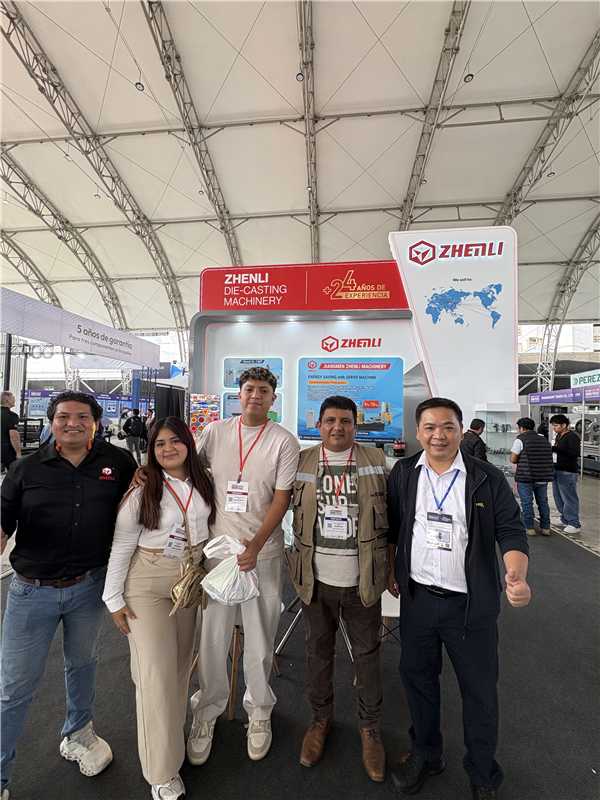
The Stand at the 2026 Peru FIMM Expo
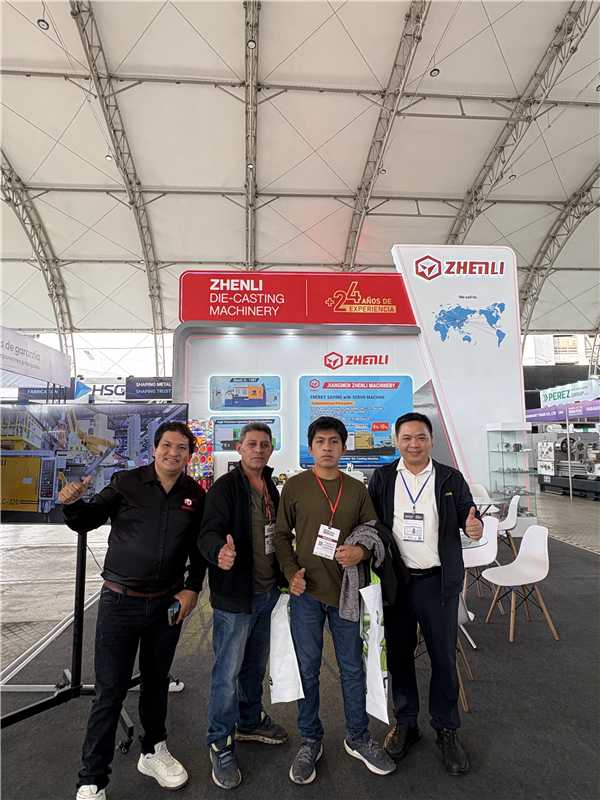
Zhenli took part in the 2026 Peru FIMM expo, one of the international metallurgy and foundry trade fairs held in the country, with a stand built to put the essentials in front of a Spanish-speaking audience at a glance. The backdrop carried the company color and a world map, a shorthand way of saying that exporting machinery across regions is routine business rather than an occasional project. A banner across the top noted more than two decades in the equipment trade, the kind of anchor a buyer reads before a single conversation starts, and useful on a floor where a good share of the technical talk runs through an interpreter.
The show itself is worth a line. Fairs of this type draw exhibitors and trade visitors from across Latin America, which is precisely why machinery builders make the trip. A few days on the floor put a manufacturer in front of foundries, job shops, and industrial buyers from several national markets at once, a concentration that few other settings can match.
What the Booth Put on Display
The equipment on the stand told the story. A ZL-130T hot chamber die casting machine sat as the working centerpiece, sized for zinc and Zamak parts, the category that covers fittings, housings, and hardware produced at a fast clip. Alongside it stood a high precision injection moulding machine, a pairing that reads as a statement about scope: the same supplier covers casting and moulding, which matters to plants that run light manufacturing across more than one material.
The choice of a hot chamber machine as the centerpiece follows the metal, not the marketing. Zinc and Zamak alloys, the families covered by standards such as ASTM B86, melt at temperatures low enough that the gooseneck and nozzle can sit directly in the molten bath, which is what makes the hot chamber process fast and repeatable in the first place. A 130-tonne class machine sits in the middle of that work, big enough for housings and structural fittings, small enough to keep cycle times short on decorative and hardware parts.
The servo energy saving message ran across the display as well. That is not a decorative slogan in a market where electricity is a real line item in the cost of a finished part, and it lines up with where regional buyers put their attention when they compare machines.
The Product Line Behind the Booth
A show stand can only hold so much, so it helps to know what sits behind the two machines a visitor sees. The hot chamber line runs from small tonnage up to the 180-tonne class, built for zinc and Zamak work. The cold chamber line covers 300 to 1600 tonnes and serves aluminum castings, the heavier structural and automotive category. Around both sit the furnaces, the automatic ladles, the spray and extraction units, and the other peripheral equipment that turns a press into a working line rather than an island.
Equipment family |
Typical range |
Metals served |
Typical work |
Hot chamber machines |
Up to the 180-tonne class |
Zinc, Zamak |
Fittings, housings, hardware, decorative parts |
Cold chamber machines |
300 to 1600 tonnes |
Aluminum |
Structural and automotive castings |
Peripheral equipment |
Configured to the line |
All |
Ladling, spraying, extraction, melting and holding |
The furnace side of the line deserves its own mention. Melting and holding equipment comes in electric and natural gas fired versions, and the right pick depends on local energy prices, alloy throughput, and how the plant manages melt quality. Getting that choice wrong shows up either in the power bill or in the scrap bin, which is why a supplier that configures the furnace alongside the press, rather than treating it as an afterthought, removes a decision that many first-time line builders get wrong.
The point of showing a hot chamber machine next to an injection moulding machine becomes clearer against that background. A buyer running zinc fittings today may add a moulding cell next year, and sourcing both from one supplier removes the coordination burden of managing two vendors, two commissioning schedules, and two service relationships.
Why the Servo Message Draws Attention
The interest in servo driven systems has a plain mechanical explanation. A conventional machine runs its hydraulic pump at a fixed speed through the whole cycle, including the moments when the cylinder is idle and the oil is simply circulating over a relief valve. A servo driven system scales pump output to demand, delivering flow and pressure when the cycle calls for it and easing off when it does not. On a machine that runs long shifts day after day, the difference shows up in the energy drawn per shift and in the heat the system puts into the oil.
For a plant in a market with elevated industrial electricity rates, that mechanism touches the largest recurring cost in the building. It is the reason energy questions come up early in serious purchase discussions in the region, and the reason a servo message on a stand earns more than a passing glance.
Verifying the claim is straightforward, at least in principle. Machine data sheets state the installed power and the typical draw under a stated cycle, and a buyer can line two machines up on paper across the same part and the same shift pattern before requesting a demonstration. What the servo systems change is not the peak capability of the press but the amount of energy burned getting there, which is exactly the number a cost calculator cares about.
What a Regional Buyer Takes From a Show
A trade fair remains one of the few places where a buyer can stand next to the actual machine, watch the build quality up close, and put technical questions to the people behind the product rather than to a brochure. Machine data, tonnage options, and cycle characteristics all read differently in person. For foundries and job shops weighing a replacement press or a first line, that direct contact shortens the evaluation path in a way that email threads cannot.
For buyers who could not make the show, the practical route is the same conversation moved to another channel: a drawing of the part, the alloys and volumes involved, and a look at the machine range that fits. Suppliers that publish their line data openly make that step easier, and the follow-up work after a show, processing inquiries into specific technical proposals, is where a booth visit turns into a working relationship.
After the Show
The 2026 Peru FIMM expo closes with the product range presented, contacts exchanged, and the regional conversation moving forward. For Zhenli, the trip continues a run of Latin American appearances, with further exhibitions planned across the region and beyond in the second half of the year, an open invitation for buyers who missed the Peru stand to see the equipment at a show closer to home.
Behind the stand sits a builder that designs and produces both hot chamber and cold chamber machines, furnaces, and the peripheral equipment that ties a line together, with in-house machining and quality control standing behind every unit that leaves the plant. For a regional buyer sizing up a supplier, that combination of machine range, plant depth, and show presence is a reasonable place to start the conversation.