 EN
EN



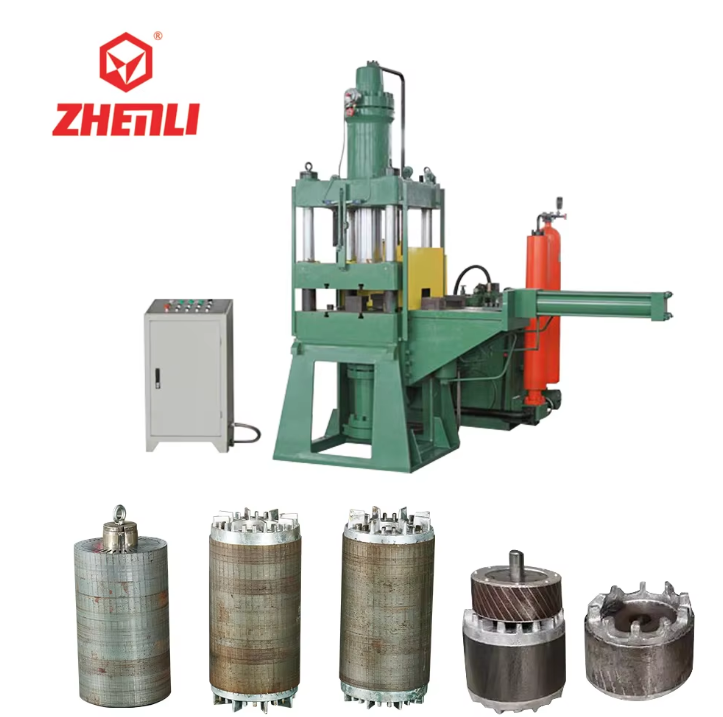
Walking into a foundry that runs three shifts, five days a week, fifty weeks a year puts a different kind of pressure on equipment decisions than a job shop that runs batch orders. The machine that works fine for a few thousand parts a month might become a bottleneck—or worse, a source of chronic downtime—when production scales to hundreds of thousands annually. High-volume environments demand a different selection framework, one that prioritizes sustained throughput, repeatability, and maintainability over raw capability alone.
Start with projected annual output, not just part size
A common mistake in machine selection is leading with part dimensions and working backward to tonnage. That approach misses the bigger picture. In high-volume production, the real starting point is the required annual volume divided by available working hours, which yields a target cycle time. Once that target is established, the machine’s shot rate, cooling capacity, and automation integration become the primary filters.
Take the example of a Midwestern automotive supplier that shifted from producing 50,000 aluminum housings per year to a contract requiring 450,000 annually. The existing 400-ton machine could handle the part geometrically, but its cycle time averaged 68 seconds. At that rate, meeting the new volume would have required running four extra shifts and still falling short. The shop ultimately moved to a 550-ton machine with a faster injection unit and integrated robotics, cutting cycle time to 42 seconds and hitting the target with two shifts of buffer.
Hot chamber versus cold chamber—the volume question
For high-volume runs, the chamber type decision carries more weight than many buyers realize. Hot chamber machines deliver faster cycles because the injection system sits directly in the molten metal bath, eliminating the ladling step. For zinc and magnesium parts, this translates to a clear throughput advantage. Cold chamber machines, by contrast, require molten metal to be poured into a shot sleeve separately, adding seconds to each cycle.
But here is the trade-off: cold chamber machines handle aluminum, copper, and other high-temperature alloys that would damage a hot chamber system. For aluminum parts in high volume—think engine blocks, transmission housings, or structural components—cold chamber is the only viable path. The question is not which type is faster in absolute terms, but which type can run the required material at the required volume without excessive maintenance intervals.
Automation readiness separates high-volume machines from the rest
A machine that requires manual part extraction, manual die lubrication, and manual quality checks might be acceptable for low-volume work. In high-volume production, those manual interventions become costly interruptions. The right machine for high volume is automation-ready from the start—equipped with standardized robotic interfaces, conveyor integration points, and sensor systems that feed back into process control.
One Chinese electronics manufacturer producing aluminum heat sinks for 5G base stations found this out the hard way. The initial machine selection prioritized clamping force and price, overlooking automation compatibility. Within six months, the operation was losing roughly 18% of available production time to manual handling and die changes. The replacement machine, selected with automation as a primary criterion, recovered that lost capacity and added a 12% throughput gain through consistent cycle timing.
Cooling and thermal management become critical at scale
Cycle time in die casting breaks down into fill time, solidification time, and extraction time. Of these, solidification time is often the hardest to compress without compromising part quality. In high-volume production, the machine's cooling system—not just the die cooling lines but the machine's ability to maintain consistent thermal conditions across the die—directly determines how many good parts come out per hour.
A 2022 NADCA study found that 42% of unplanned production delays in high-volume foundries traced back to thermal management issues, primarily uneven die temperatures causing extended cooling cycles or part distortion. Machines with closed-loop cooling control and real-time temperature monitoring can reduce that variability significantly, delivering more predictable cycle times across long runs.
Total cost of ownership shifts the calculation
High-volume production magnifies every cost component. A machine that costs 15% more upfront but delivers 10% faster cycles and 20% lower maintenance over five years typically wins the total-cost-of-ownership comparison. Energy consumption matters too—high-volume machines run continuously, so even modest efficiency gains compound into meaningful savings.
|
Selection Factor
|
Low-Volume Priority
|
High-Volume Priority
|
|---|---|---|
|
Clamping force
|
Match part requirement
|
Match part + 20% safety margin
|
|
Cycle time
|
Secondary concern
|
Primary metric
|
|
Automation
|
Optional
|
Mandatory
|
|
Cooling control
|
Basic
|
Advanced closed-loop
|
|
Maintenance access
|
Convenient
|
Critical—minimize downtime
|
|
Energy efficiency
|
Low priority
|
High priority
|
The data supports this shift in emphasis. Operations running at scale typically see energy costs account for 8–12% of total production cost, compared to 3–5% in low-volume settings. A machine with energy-efficient hydraulics and heat recovery can cut that portion by 15–25%.
The practical takeaway
Selecting for high volume means selecting for endurance. The machine needs to run consistently, recover quickly from interruptions, and maintain part quality across millions of cycles. That requires looking beyond the spec sheet to consider how the machine performs over a full shift, a full week, and a full year of continuous operation.
Machinery providers like Zhenli approach high-volume applications with this endurance mindset, designing their cold chamber lines with robust thermal management, automation interfaces, and clamping systems that hold precision across extended production runs. The right partner understands that in high-volume production, the machine is not just a tool—it is the backbone of the entire operation.