 EN
EN



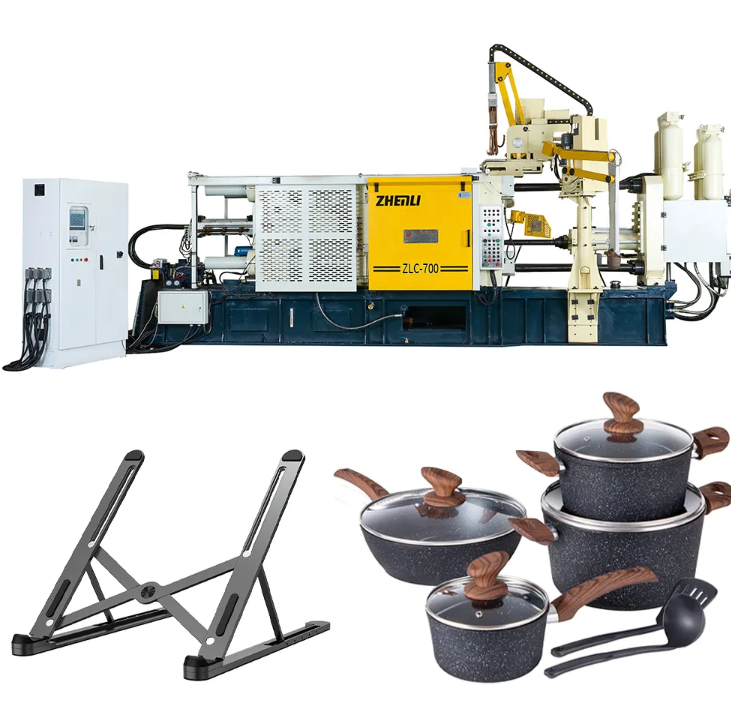
Why Aluminum Demands a Cold Chamber Die Casting Machine
Because aluminum has such a high melting temperature around 660 degrees Celsius, manufacturers typically rely on cold chamber die casting instead of hot chamber systems. The reason? Molten aluminum eats away at parts that are constantly submerged in the metal, like those gooseneck shapes and plungers we see in hot chambers, leading to all sorts of expensive damage over time. With cold chamber setups, the actual injection system stays separate from the molten metal itself. What happens is workers have to pour the aluminum by hand into these special sleeves lined with heat resistant materials, then a powerful hydraulic plunger pushes everything into the mold cavity under pressure sometimes going beyond 15 thousand pounds per square inch. Keeping that distance between metal and machinery not only stops corrosion but also means equipment lasts longer while giving better temperature control. This matters a lot when working with premium aluminum grades like A380 where precision really counts.
Manufacturers in the field have found that trying to cast aluminum using hot chamber machines can cost them around $740,000 each year due to equipment damage according to a study by Ponemon Institute back in 2023. Switching to cold chamber systems cuts down on those pesky impurities that come from worn plungers, which matters a lot for industries like aerospace and automotive where metal quality just has to be spot on. These cold chamber methods deliver really tight measurements within about plus or minus 0.1 millimeters and create much better surfaces too. That makes them ideal for mass producing complicated parts that need to meet strict safety standards, think engine blocks or structural supports for vehicles.
Key Selection Criteria for a Cold Chamber Die Casting Machine in Aluminum Applications
Clamping Force Requirements for Common Aluminum Alloys (A380, A383, A390)
When working with aluminum alloys such as A380, A383, and A390, the right amount of clamping force really depends on how these materials behave when they solidify and expand thermally. Take A380 for instance—it flows quite well, so around 800 to 1,200 tons of pressure works fine for making those thin walled components. But things get tricky with A390 because of its rough eutectic structure and tendency to shrink more during cooling. Manufacturers often need over 2,500 tons just to stop unwanted flash formation and keep dimensions accurate, particularly when dealing with complex shapes that have lots of details. For anyone calculating projected areas, remember to factor in each alloy's unique thermal expansion characteristics too. This helps ensure molds stay intact after going through countless heating and cooling cycles without warping or breaking down prematurely.
Precision Shot Control and Thermal Stability at 650–760°C Molten Aluminum Temperatures
Keeping temperatures steady between around 650 degrees Celsius to about 760 degrees is really important for maintaining how aluminum flows during casting without it solidifying too early or creating those annoying pores from turbulence. The newer cold chamber machines come equipped with these fancy multi-stage shot controls that can handle injection speeds over 6 meters per second while still keeping things flowing smoothly in layers rather than chaotic swirls. With ceramic lined parts built right in plus those moving cooling circuits, they manage to keep heat distribution pretty stable within about plus or minus 5 degrees Celsius. This helps prevent those cold shut problems especially noticeable on intricate details such as bracket ribs and small fillet areas, which ultimately makes the whole structure much more reliable when put to real world stress.
Critical Cold Chamber Die Casting Machine Components for Aluminum Compatibility
Aluminum’s reactivity and elevated processing temperatures demand specialized machine components to avoid soldering (metal adhesion), dimensional drift, and contamination. Without robust thermal and chemical resistance, standard steel components degrade rapidly under cyclic exposure to molten aluminum above 700°C—compromising both part quality and production uptime.
Refractory-Lined Shot Sleeve and Ceramic-Coated Plunger
The shot sleeve uses a silicon carbide-based refractory lining to insulate against extreme heat—reducing thermal transfer to surrounding machine structures by up to 40% and preventing aluminum adhesion. Concurrently, the plunger is coated with inert, wear-resistant ceramics such as chromium oxide or alumina, delivering three key advantages:
- Abrasion resistance against hard intermetallic phases in aluminum alloys
- Chemical inertness, eliminating reaction-driven defects like dross entrapment
- Sealing integrity, sustaining injection pressures up to 150 MPa
This dual-material strategy extends component service life by 3–5 times compared to uncoated steel—directly lowering maintenance frequency and scrap rates in high-volume aluminum production.
Validating Performance: Real-World Output and Aluminum Production Benchmarks
Testing machines in actual production settings tells us if a cold chamber die casting system really works well with aluminum beyond what the specs claim. Important things to check are how stable dimensions stay when temperatures change, keeping defects low enough for the industry standards like less than 1% scrap rate on car parts that need to hold together. Energy usage matters too, especially when running at full capacity for long periods. When making parts for cars, there are several tests that must pass. First comes checking if fluids will leak through by applying pressure. Then we simulate wear and tear from repeated stress cycles. Lastly, we verify how materials handle sudden temperature changes. These tests help make sure metal quality stays good so tiny flaws don't become big problems later.
Case Study: High-Volume Automotive Bracket Production with A380 on a 2,500-Ton Cold Chamber Die Casting Machine
A Tier 1 supplier achieved 98.7% dimensional compliance on A380 aluminum brackets using a 2,500-ton cold chamber die casting machine. Key outcomes included:
- 22-second cycle times maintained at 720°C molten aluminum temperature
- Scrap rates held below 0.8% through closed-loop shot control and real-time viscosity monitoring
- 18% reduction in energy consumption versus legacy hydraulic systems
Thermal stability eliminated hot tearing at bracket junctions, while adaptive process controls compensated for minor alloy batch variations. The system reliably produced 14,000 units daily—validating cold chamber technology for structural automotive components meeting ASM Class 2 integrity standards.