 EN
EN



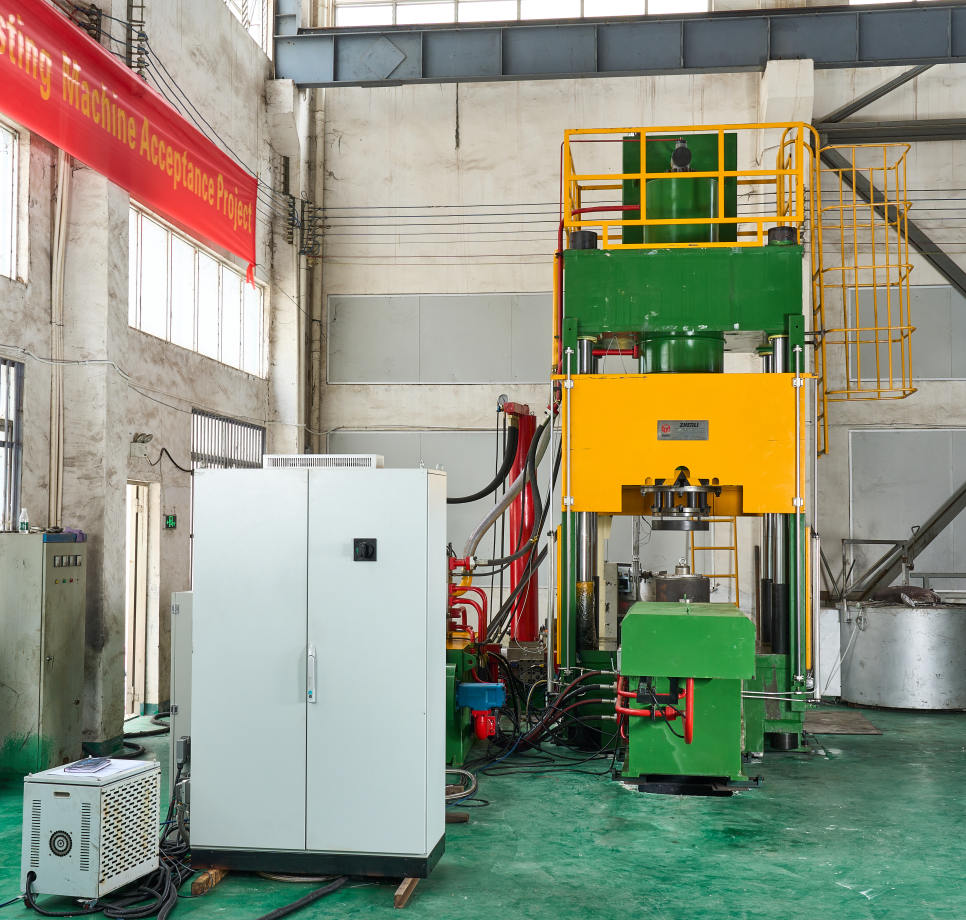
Precision Control in Rotor Casting Machine Operations
Consistent Mold Filling and Uniform Solidification for Microstructural Integrity
Today's rotor casting equipment keeps the material structure intact by carefully controlling how the molten metal fills and hardens in the mold. These machines have sophisticated heat control systems that keep temperatures stable within half a degree Celsius, which is really important for maintaining the right consistency of the liquid metal and making sure it flows properly. When done right, this level of control stops those annoying flow problems that lead to bad cooling spots and stress points in the final product. Manufacturers who sync up the cooling process throughout the whole mold end up with much more uniform grain patterns inside the rotor core area. According to various industry reports, this method cuts down on internal stresses by around 30% when compared to older casting techniques. That makes a big difference in how well the material conducts magnetism and stands up to repeated stress over time.
Minimizing Porosity and Inclusions Through Pressure-Temperature Synchronization
Porosity and non-metallic inclusions are significantly reduced when injection pressure is dynamically synchronized with real-time molten alloy temperature. Sensors continuously monitor thermal state and adjust pressure profiles to match optimal viscosity windows—preventing gas entrapment and incomplete cavity fill. The process unfolds in two calibrated phases:
- Phase 1: High-pressure injection (150–200 MPa) during peak fluidity
- Phase 2: Gradual pressure decay during early solidification to facilitate controlled gas escape
Leading manufacturers report up to 40% fewer inclusions using this method. A 2023 metallurgical study published in Journal of Materials Processing Technology found that pressure-temperature synchronization reduced porosity-related motor failures by 22% in industrial field deployments.
| Control Parameter | Traditional Process | Precision Synchronization | Quality Impact |
|---|---|---|---|
| Temperature Variance | ±5°C | ±0.5°C | Eliminates cold shuts |
| Pressure Stability | ±15% | ±2% | Prevents gas porosity |
| Solidification Rate | Variable | Uniform | Enhances grain density |
Defect Prevention via Advanced Filling Pattern Optimization
CFD-Guided Gate Design to Eliminate Turbulence and Cold-Shut Defects
Using Computational Fluid Dynamics (CFD) simulations lets manufacturers tweak gate shapes long before actual tools get made. When engineers map out how fast materials move, track temperature changes across surfaces, and watch how metals solidify, they can create better pathways for material to fill rotor spaces smoothly instead of creating messy turbulence that gets air trapped inside or causes unwanted oxides to form. Getting this right stops those pesky cold shut problems where partially melted metal doesn't properly join together something that really messes with the magnetic balance of completed rotors. According to some industry research from ASM International, companies using these simulation techniques see around a 40% drop in those annoying air pockets caused by turbulence specifically when working with precise aluminum and copper alloy casts.
Real-World Validation: 22% Cold-Shut Reduction After Rotor Casting Machine Calibration (Siemens Energy, 2023)
The team at Siemens Energy went ahead and adjusted their rotor casting machine based on these thermal pressure limits they got from computational fluid dynamics analysis across all three production lines. They matched up those pressure curves with actual temperature readings while filling the molds, which helped keep the metal moving forward consistently throughout the process. After putting these changes into practice, quality checks showed there was around 22 percent fewer cold shut defects. We confirmed this through both ultrasonic tests and looking at cut sections of the castings. Getting better dimensional consistency meant the parts had much better electromagnetic balance too. These improvements met the strict ISO 1940 Class G2.5 standards right out of the gate, so no need for extra work after casting. Looking at what happened here shows just how making smart adjustments to the filling process can really boost reliability when scaling up production.
End-to-End Quality Assurance: From Casting to Dynamic Balancing
In-Line Dimensional Inspection and Eccentricity Mapping Post-Casting
Right after they come out of the mold, cast rotors get checked automatically for their dimensions using those fancy laser scanners and optical measuring devices. The machines look at important parts like the diameter of the shaft journals, how much the bearing seats wobble, and whether the cores are centered properly within very tight tolerances around plus or minus 0.05 millimeters. At the same time, rotary encoders create detailed maps showing where things might be off center or distorted during solidification down to fractions of a micron. The software then connects any problems it finds back to settings on the casting machine itself, like what temperature the mold was at or when exactly material got injected into it. This lets operators tweak things right away before making more parts. Studies from ASM International suggest that this kind of built-in quality check cuts down waste by about 19 percent compared to checking everything in batches later on.
Integrated Balancing Feedback Loop for High-Speed Motor Rotor Certification
After machining, high speed rotors spinning at 15,000 RPM or higher go straight into our dynamic balancing station. As they spin up, vibration sensors pick up on any imbalances, and our machine learning algorithms figure out where to place corrective masses and how deep they need to be. The CNC milling machines then get these new coordinates sent to them automatically, which means we can achieve ISO 21940 Grade G2.5 balance standards within just 15 minutes for each rotor. What makes this system really effective is that it sends back information about common imbalance patterns to the casting process itself. When certain areas keep showing mass asymmetry issues, we adjust things like feeder geometry, where gates are placed, or even tweak local cooling rates during casting. This helps cut down on problems right from the start. Automotive companies making traction motors have reported around 99.8% success rate on their first quality checks when using this kind of feedback loop system in production.