 EN
EN



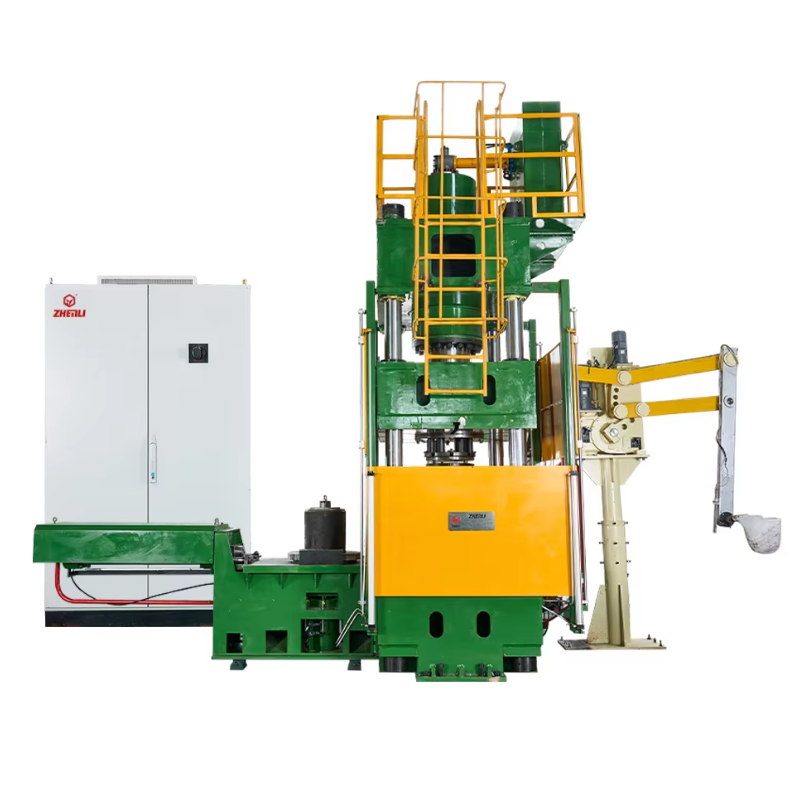
The Hidden Challenge of Casting Large Parts
Running large molds on a standard cold chamber machine often feels like fighting the equipment rather than working with it. The mold heats up unevenly, the shot takes too long to fill, and every third part comes out with surface defects that should not be there. The problem is not the mold design or the aluminum alloy. The problem is temperature—specifically, the temperature of the platen that holds the mold.
A heated platen changes that dynamic entirely. It keeps the mold at a consistent temperature before the shot even starts, which means the molten aluminum flows into the cavity under stable thermal conditions. For large molds with long flow paths and complex geometries, that stability is not a luxury. It is a requirement for producing sound parts.
What a Heated Platen Actually Does
The platen is the large metal plate that holds the stationary half of the mold against the machine. On a standard machine, the platen is unheated. It sits at ambient temperature or gradually warms up from the heat transferred from the mold during production. That gradual warming creates a thermal gradient across the platen surface, which in turn creates a thermal gradient across the mold.
A heated platen integrates electric heating elements directly into the platen casting, allowing the platen to reach and maintain a set temperature before the first shot is made. The heating elements are distributed across the platen surface in a pattern designed to deliver uniform temperature across the entire mold mounting area. For large molds—those spanning a meter or more in each direction—that uniformity is critical.
The Real Problem with Unheated Platens on Large Molds
Here is what happens without a heated platen. The first few shots run cold. The mold has not reached operating temperature, so the aluminum freezes too quickly, causing short shots and poor surface finish. By the time the mold warms up, the platen is still cold, drawing heat out of the mold unevenly. The center of the mold runs hotter than the edges, which means the casting solidifies at different rates across the part. That differential solidification creates internal stresses, warpage, and dimensional variations.
For small molds, the thermal mass is small enough that the mold itself can reach thermal equilibrium relatively quickly. For large molds, the thermal mass is substantial, and the unheated platen acts as a giant heat sink. It pulls heat away from the mold faster than the shot can replace it, creating a persistent thermal imbalance that never fully resolves.
The result is a scrap rate that climbs with mold size. A job that runs at 5% scrap on a 500-ton machine might jump to 15% or 20% on a 2500-ton machine with the same mold design, purely because of thermal instability.
Heated Platens and Shot Integrity
The benefits of a heated platen extend beyond defect reduction. For large molds, the shot itself—the volume of molten aluminum injected into the cavity—cools as it travels from the gate to the far end of the part. That cooling changes the viscosity of the aluminum, which changes how it fills the cavity. The first metal in is hotter and flows more easily than the last metal in, which can cause flow marks, cold shuts, and incomplete fills.
A heated platen keeps the mold at a consistent temperature throughout the fill, reducing the temperature drop that the shot experiences as it travels. The flow front stays more consistent, which means the cavity fills more uniformly and the part solidifies more evenly.
| Factor | Unheated Platen | Heated Platen |
|---|---|---|
| Mold temperature distribution | Uneven—cold edges, hot center | Uniform across entire surface |
| Shot cooling during fill | Significant temperature drop | Minimal, stable thermal environment |
| Thermal equilibrium time | Multiple cycles, often never fully achieved | Reached before first shot |
| Scrap rate on large molds | 15–20% typical | 5–8% achievable |
| Part dimensional consistency | Variable—warpage and shrinkage | Stable—predictable |
The Economics of Heated Platens
The additional cost of a heated platen is not trivial, but neither is the cost of scrapping 15% of every run. A manufacturer casting large aluminum components—say, automotive structural parts or industrial housings—ran the numbers on a 2000-ton machine producing 15,000 parts per month. At a 15% scrap rate, that is 2,250 parts lost every month. At an average part value of $120, that is $270,000 in annual scrap cost.
Switching to a machine with a heated platen dropped the scrap rate to 6%. Annual scrap cost fell to $108,000. The equipment upgrade paid for itself in less than eight months. Those numbers are not hypothetical. They come from a real production audit at a Midwest automotive supplier that was struggling with porosity and dimensional issues on a large transmission housing.
The heated platen did not solve every problem on that line, but it addressed the single largest source of variability. The rest of the process—shot speed, pressure, alloy temperature—could be dialed in once the thermal baseline was stable.
When a Heated Platen Might Not Be Necessary
A heated platen is not the right choice for every application. For small molds with short flow paths, the thermal mass is low enough that the mold reaches equilibrium quickly, and the platen temperature has minimal impact on part quality. For high-volume production of small parts, the cost of the heated platen may not justify the incremental improvement.
The value proposition is strongest for large molds—those with platen contact areas exceeding one square meter, long flow paths, and complex geometries that are sensitive to thermal variation. For those applications, the heated platen is not a luxury; it is a tool for achieving acceptable yield.
It is also worth noting that a heated platen requires proper maintenance. The heating elements have a finite lifespan, and uneven element failure can create hot spots that defeat the purpose of the system. Regular inspection and replacement on a scheduled basis are part of the operating cost.
The Bottom Line on Heated Platens
For any operation running large aluminum die casting molds, the question is not whether a heated platen is nice to have. The question is whether the operation can afford not to have one. The scrap reduction alone often covers the investment, and the improved part consistency reduces downstream machining and rework costs.
Manufacturers like Zhenli incorporate heated platen options across their cold chamber machine lines, recognizing that large-mold applications demand thermal control that standard platens cannot provide. The technology is proven, the economics are clear, and for large parts, the difference in yield is measurable from the first shift.