 EN
EN



The Scale Problem That Changed the Industry
Electric vehicle battery housings are not small parts. A typical EV battery pack enclosure measures well over a meter in length and width, with complex internal ribbing, mounting points, and cooling channels. Casting that kind of geometry in one piece requires a machine that can do more than just close a mold with enough force. It requires clamping capacity measured in thousands of tons, injection systems that can fill massive cavities before the aluminum begins to freeze, and thermal management that keeps the whole process stable.
The shift toward high-tonnage aluminium die casting machines for EV battery housings is not a trend. It is a direct response to the physical demands of the part itself. Anything less than about 2500 tons simply cannot hold a mold that size closed under the injection pressures required to fill it.
What "High Tonnage" Actually Means in This Context
In the world of aluminum die casting, high tonnage starts somewhere around 2000 tons and goes up from there. The machines used for EV battery housings typically fall in the 2500-ton to 6000-ton range, with some of the largest integrated casting operations pushing into 10,000 tons and beyond.
The tonnage number refers to the clamping force—the amount of pressure the machine applies to keep the two halves of the mold shut during injection. Aluminum is injected at pressures of 100 to 200 MPa. That pressure acts against the mold surfaces, trying to force them apart. If the clamping force is insufficient, the mold separates slightly, creating flash, dimensional errors, and in severe cases, complete part failure.
For a battery housing that might have a projected area of 1.5 square meters or more, the total force trying to open the mold during injection is enormous. A 2500-ton machine provides 25,000 kN of clamping force. That is enough to keep a mold of that size closed, but just barely. As housings get larger and more integrated, the tonnage requirement climbs with them.
Why Battery Housings Demand More Than Other Automotive Castings
Automotive castings like engine blocks and transmission cases have been produced on 1500-ton and 2000-ton machines for years. Battery housings are different. They are larger, thinner, and have more complex internal geometry. The wall thickness on a typical EV battery housing is often 2.0 mm or less. That is significantly thinner than an engine block, which might have walls of 3 mm or more.
Thin walls mean the aluminum cools faster. Faster cooling means the injection must be completed more quickly, before the metal solidifies in the runner or the far end of the cavity. To fill a large, thin-walled cavity quickly requires high injection speeds and high injection pressures. Both of those require high clamping force to keep the mold closed.
| Requirement | Engine Block | EV Battery Housing |
|---|---|---|
| Typical wall thickness | 3.0–4.0 mm | 1.8–2.5 mm |
| Projected area | Moderate | Large—1.5+ m² |
| Clamping force needed | 1500–2500 tons | 2500–6000 tons |
| Injection pressure | 100–150 MPa | 150–200 MPa |
| Cooling channels | Simple | Complex, integrated |
The integration trend makes the problem worse. Manufacturers are moving toward single-piece castings that consolidate dozens of individual stampings and extrusions into one component. A single-piece battery housing might replace 50 or more separate parts, eliminating welding, fastening, and assembly operations. But that single piece is larger and more complex than any of the individual parts it replaces, which means it requires even more clamping force and even more precise injection control.
The Porosity Problem That Only High Tonnage Can Solve
Porosity is the enemy of any die casting, but it is particularly damaging in battery housings. Porosity creates weak points that can compromise structural integrity in a crash. It also creates pathways for moisture and contaminants to reach the battery cells.
High tonnage machines address porosity in two ways. First, the higher clamping force keeps the mold sealed more tightly, preventing air from being drawn into the cavity during injection. Second, the injection systems on high-tonnage machines are designed to achieve higher fill speeds, which reduces the time available for air entrapment.
A 4000-ton machine can fill a battery housing mold in milliseconds faster than a 2500-ton machine, simply because its hydraulic system is larger and its shot accumulator is more powerful. That difference in fill time translates directly to lower porosity and better mechanical properties.
A major EV manufacturer reported that moving from a 2500-ton to a 4400-ton machine on a battery housing program reduced porosity-related scrap by 40% and improved the tensile strength of the casting by 12%. The higher tonnage did not just keep the mold closed—it enabled a faster, more controlled fill that produced a denser, stronger part.
The Thermal Management Challenge
Battery housings are not just structural enclosures. They are also thermal management components. Many designs incorporate integrated cooling channels that circulate fluid to regulate battery temperature. Those channels are cast into the part, which means the mold has complex cores and slides that must be filled completely.
Filling those channels without porosity or incomplete fill requires precise control of metal temperature, fill speed, and pressure. High-tonnage machines typically come with more sophisticated injection control systems—multi-stage filling profiles, real-time pressure monitoring, and servo-controlled shot cylinders that can adjust on the fly.
The thermal mass of a large battery housing mold is substantial. The mold itself might weigh 20 tons or more. Getting that much steel up to operating temperature and keeping it there requires a machine with robust heating and cooling systems. High-tonnage machines are designed for that kind of thermal load in a way that smaller machines are not.
When High Tonnage Is Not the Answer
High tonnage is not a universal solution. For smaller castings—say, under 5 kilograms with projected areas under 0.5 square meters—a 2500-ton machine is overkill. The cost of the equipment, the energy consumption, and the floor space required make it impractical for parts that do not need that capacity.
There is also a learning curve. Operating a 4000-ton machine is different from operating a 1500-ton machine. The injection parameters are more sensitive, the thermal management is more complex, and the safety considerations are more demanding. Not every foundry is ready for that transition.
But for EV battery housings, there is really no alternative. The part is too large, too thin, and too complex to be cast on smaller equipment and still meet the quality and performance requirements of the automotive industry.
The Bottom Line on High-Tonnage Machines for EV Battery Housings
The essential nature of a high-tonnage aluminium die casting machine for EV battery housings comes down to physics. The part is large, the walls are thin, the fill must be fast, and the mold must stay closed. Anything less than 2500 tons cannot deliver all of those requirements simultaneously.
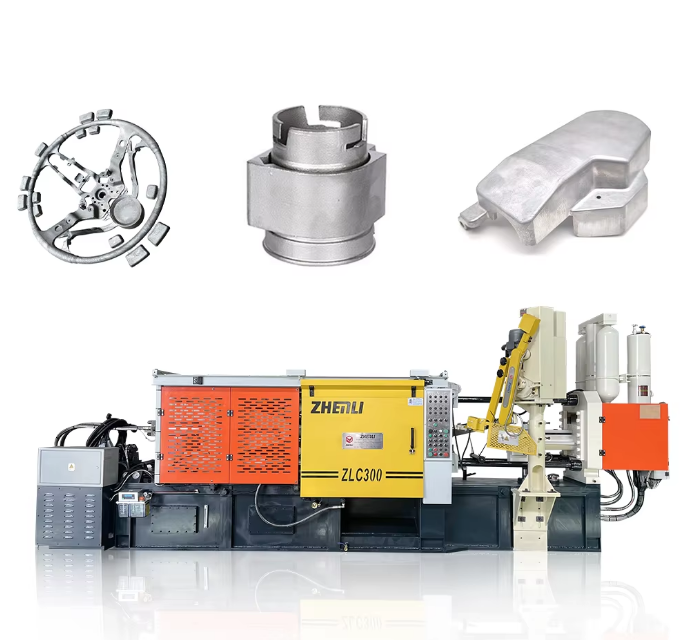
Manufacturers like Zhenli have recognized this shift, offering cold chamber machines with clamping forces ranging from 1000 to 4500 tons to meet the needs of EV component production. The technology is evolving rapidly, and the tonnage requirements are only going up as housings get larger and more integrated. For any operation entering the EV supply chain, the question is not whether to invest in high tonnage. It is how soon.
Table of Contents
- The Scale Problem That Changed the Industry
- What "High Tonnage" Actually Means in This Context
- Why Battery Housings Demand More Than Other Automotive Castings
- The Porosity Problem That Only High Tonnage Can Solve
- The Thermal Management Challenge
- When High Tonnage Is Not the Answer
- The Bottom Line on High-Tonnage Machines for EV Battery Housings