 EN
EN



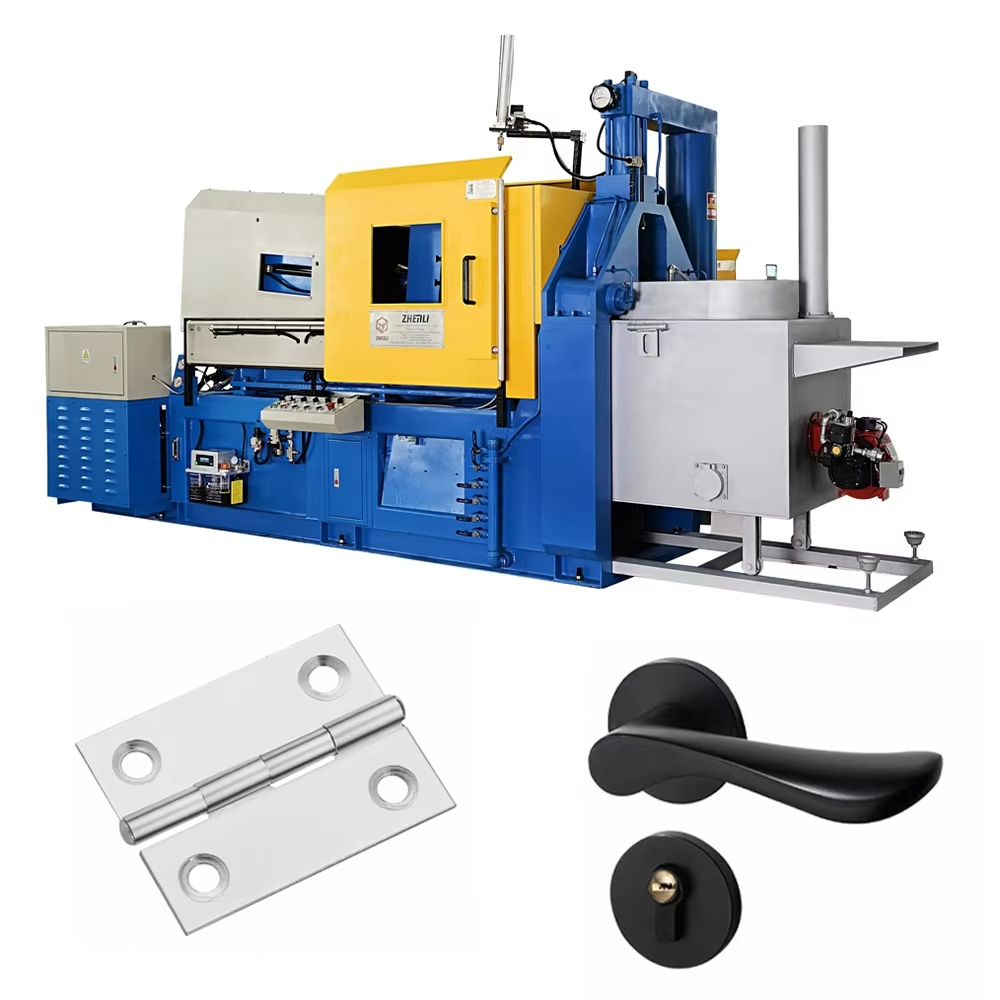
Speed isn't the only thing — but it's close
Walk through a facility running hot chamber die casting machines for small zinc parts, and the rhythm is unmistakable. The clack of the die closing, the hiss of the shot, the spray of the release agent, the clunk of the part ejecting — all on a beat that feels almost musical. Cycle times in the 10-to-25-second range are routine. For multi-slide machines running tiny components, rates can push 5 to 30 cycles per minute.
That speed is the headline feature of hot chamber die casting for small parts. But the real story is why the hot chamber machine makes that speed possible — and what it means for production economics, part quality, and overall shop efficiency.
The hot chamber advantage: built for speed
The hot chamber die casting machine's speed advantage starts with its fundamental design. The injection system sits submerged in the molten metal bath. When the plunger retracts, it pulls a shot of metal into the gooseneck. When it advances, that metal is pushed directly into the die. No ladling. No transfer from a separate furnace. No waiting for metal to be poured into a shot sleeve.
That might sound like a small difference, but in high-volume production, it adds up fast. The production rate of a hot chamber machine is higher than that of a cold chamber machine because of the shorter time required during the pour operation. For parts that weigh a few grams to a few hundred grams, the hot chamber process can be 20% to 40% faster than cold chamber alternatives.
But the speed isn't just about eliminating the ladling step. The hot chamber design also keeps the metal at a consistent temperature from melt to injection. There's no temperature drop during transfer, no oxidation from pouring, no variability in the metal condition from shot to shot. That consistency means fewer bad shots, less scrap, and less time spent adjusting process parameters between cycles.
Small parts, big numbers
Small parts are where the hot chamber die casting machine really shines. The economics of high-speed production work differently when you're making thousands of parts per hour versus dozens per hour. The fixed costs — machine amortization, labor, setup time — get spread across a much larger number of parts. Every second shaved off the cycle time translates into real money.
Consider a typical small zinc part: a zipper slider, a key cap, a lock component, a connector housing. These parts weigh anywhere from 2 to 50 grams. They're produced in volumes that can run into the millions. A hot chamber machine running at a 15-second cycle produces 240 parts per hour. At a 10-second cycle, that's 360 parts per hour. Over a 24-hour run, the difference is nearly 3,000 parts.
Multi-slide hot chamber machines take this even further. These are high-speed automatic machines that use the hot chamber die casting method. With typical cycle rates ranging from 5 to 30 cycles per minute, they can produce complex small components with minimal secondary operations — often eliminating the need for trimming or deburring entirely.
| Part Type | Typical Weight | Cycle Time (Hot Chamber) | Output per Hour |
|---|---|---|---|
| Zipper slider | 5-15 g | 8-12 sec | 300-450 |
| Key cap | 3-8 g | 6-10 sec | 360-600 |
| Lock component | 20-50 g | 12-18 sec | 200-300 |
| Connector housing | 10-30 g | 10-15 sec | 240-360 |
What makes small parts different
Small parts aren't just smaller versions of large parts. They have different design constraints, different quality requirements, and different failure modes. That's why the hot chamber die casting machine's characteristics align so well with small-part production.
First, small parts have high surface-area-to-volume ratios. They cool quickly, which means the die temperature needs to be managed carefully to avoid cold shuts and surface defects. The consistent melt temperature of a hot chamber machine helps maintain stable filling conditions even with fast cycle times.
Second, small parts often have intricate geometry — thin walls, fine details, tight tolerances. The hot chamber's direct injection path, with its short distance from the gooseneck to the die cavity, minimizes the pressure drop that can occur in longer shot systems. That means the metal reaches the far corners of the cavity with enough energy to fill completely.
Third, small parts are often produced in huge volumes where even small improvements in cycle time or yield have a big impact on the bottom line. The hot chamber machine's speed and consistency directly address this economic reality.
Quality at speed: the consistency factor
High speed doesn't have to mean high scrap. In fact, a well-tuned hot chamber die casting machine running small parts can achieve scrap rates that are lower than slower cold chamber processes, precisely because of the consistency factor.
The shot-to-shot repeatability of a hot chamber machine comes from several design features:
The metal is always at the same temperature — no variability from ladling or transfer.
The shot volume is precisely controlled by the plunger stroke — no variation from manual pouring.
The injection pressure profile can be tuned and repeated with high accuracy on modern servo-controlled machines.
That repeatability means the first part of a run looks like the last part, hours or days later. For customers who need thousands of identical small parts, that consistency is at least as valuable as the speed itself.
A real-world high-speed application
A manufacturer of electronic connectors was running small zinc housings on an older cold chamber machine. Cycle time was around 28 seconds. The parts were simple — about 15 grams each, with a few thin walls and a snap-fit feature. Volume was about 500,000 parts per month.
The switch to a hot chamber die casting machine cut the cycle time to 14 seconds — exactly half. But the bigger surprise was the scrap reduction. The cold chamber process had been running at about 6% scrap, mostly due to short shots and porosity in the thin-wall sections. The hot chamber machine, with its consistent melt temperature and direct injection, brought scrap down to under 2%.
The math was straightforward. Doubling the throughput while cutting scrap by two-thirds meant the new machine paid for itself in less than 18 months. And because the hot chamber machine had a smaller footprint than the cold chamber setup, the shop freed up floor space for additional automation.
The cost side of speed
Speed isn't free. Hot chamber die casting machines have their own cost structure that needs to be factored into the decision.
The gooseneck and plunger are immersed in molten metal, which means they're subject to continuous wear. Regular maintenance and replacement of these components is a fact of life with hot chamber operation. For zinc, this wear is manageable — the melting point is low enough that the steel components hold up well over many cycles. But it's still a cost that needs to be budgeted.
Energy consumption is another factor. The integrated furnace in a hot chamber machine runs continuously, keeping the metal at temperature even when the machine is idle. For shops that run three shifts, that's fine — the furnace is doing useful work around the clock. For shops with intermittent production, the energy cost of keeping the furnace hot during downtime needs to be considered.
The trade-off generally works in favor of hot chamber for high-volume, small-part production. The speed and consistency advantages typically outweigh the maintenance and energy costs by a wide margin. But it's worth running the numbers for each specific application.
The verdict on hot chamber for small parts
The hot chamber die casting machine is the ideal choice for high-speed production of small parts not because of any single feature, but because of how all its characteristics align with the demands of that market. The speed comes from the direct injection design. The consistency comes from the stable melt temperature and precise shot control. The economics come from the combination of high throughput and low scrap.
For zinc small parts — and there are billions of them produced every year — the hot chamber machine delivers a combination of speed, quality, and cost that other processes struggle to match. That's why it remains the dominant technology in this space, and why it's likely to stay that way for the foreseeable future.