 EN
EN



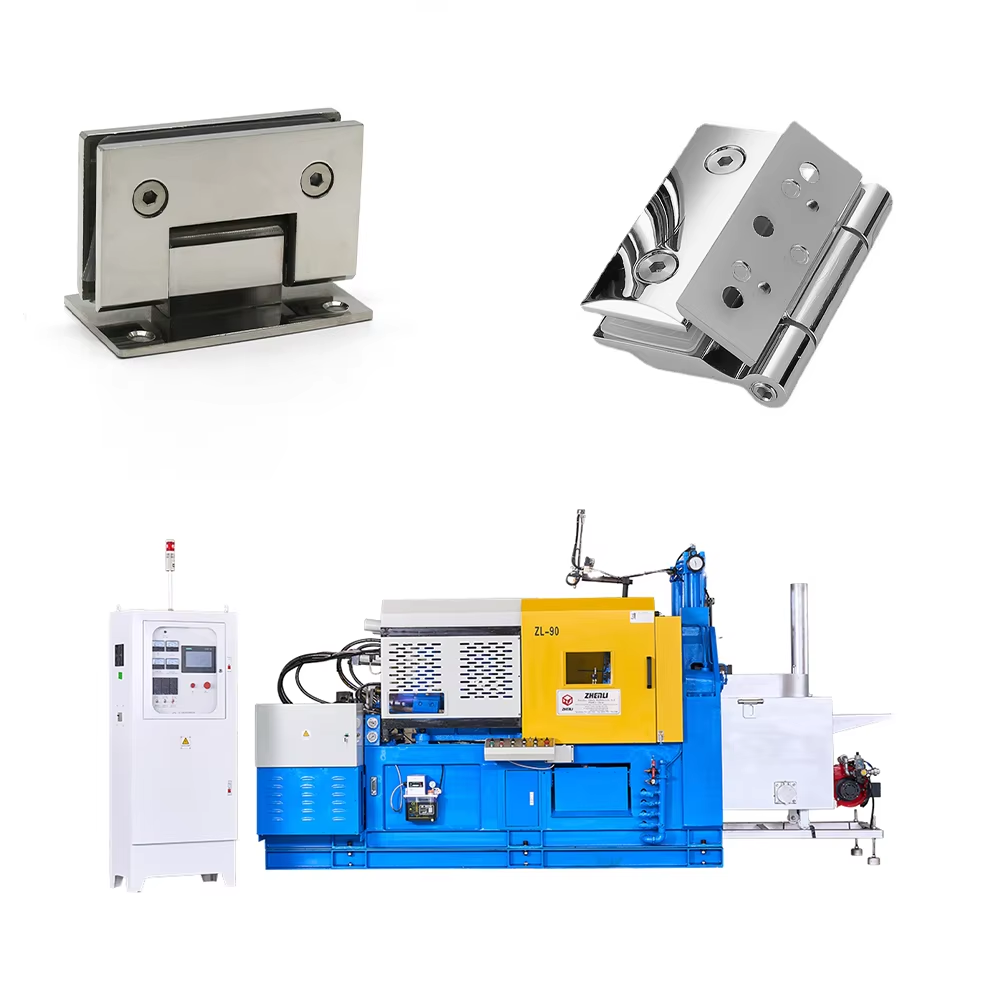
Two machines, one question
Walk onto any die casting shop floor, and you'll see one of two types of machines doing the heavy lifting: hot chamber or cold chamber. For zinc, the choice seems straightforward — most zinc die casting runs on hot chamber equipment. But the real question isn't which one is "better." It's which one fits the specific alloy, part geometry, and production requirements of the job.
The fundamental difference comes down to how the molten metal gets from the melting pot to the die cavity. In a hot chamber machine, the injection system sits submerged in the molten metal bath. In a cold chamber machine, the metal is melted in a separate furnace and ladled into the shot sleeve for each cycle. That single difference ripples through everything — cycle time, operating cost, alloy compatibility, and part quality.
Hot chamber: the zinc workhorse
Hot chamber die casting machines are the default choice for zinc and other low-melting-point alloys like magnesium and lead. The injection mechanism — gooseneck, plunger, and nozzle — sits directly in the molten metal bath. When the plunger retracts, it draws a measured amount of metal into the gooseneck. When it advances, it forces that metal through the nozzle and into the die.
This setup has a few big advantages. First, the metal stays at a consistent temperature from melt to injection — there's no transfer step where it can cool or oxidize. Second, the cycle is fast. There's no ladling step, no waiting for metal to be poured into the shot sleeve. The production rate of a hot chamber machine is higher than that of a cold chamber machine because of the shorter time required during the pour operation. For small, high-volume zinc parts, that speed translates directly into lower per-part costs.
Third, the machine footprint is smaller. The integrated melting furnace and shot system take up less floor space than a cold chamber setup with its separate holding furnace and ladling system.
But there are limits. Hot chamber machines can't handle alloys with high aluminum content — ZA-27, for example, is typically run on cold chamber equipment. The aluminum in the alloy attacks the steel components of the hot chamber injection system, accelerating wear. And the maximum injection pressure in a hot chamber machine is generally lower than what cold chamber systems can deliver, which matters for thick-walled parts or those requiring very dense castings.
Cold chamber: when the metal gets too hot
Cold chamber die casting exists because some alloys are simply too aggressive for the hot chamber's submerged hardware. Aluminum, copper, and brass alloys have melting points that would quickly degrade the gooseneck and plunger if they were constantly immersed. In a cold chamber machine, the molten metal is prepared in a separate furnace, then transferred via automated ladle or manual pouring into the shot sleeve. The injection plunger then forces the metal into the die.
For zinc, cold chamber machines come into play for specific scenarios:
Zinc-aluminum alloys with higher aluminum content (ZA-12, ZA-27)
Parts requiring higher injection pressure than a hot chamber can provide
Very large castings where the shot size exceeds what a hot chamber can deliver
The cold chamber process uses higher pressure than the hot chamber process, which can produce denser castings with less porosity. But that pressure comes at a cost — the cycle is slower because of the ladling step, and the separate furnace adds equipment and energy costs.
| Feature | Hot Chamber | Cold Chamber |
|---|---|---|
| Alloy compatibility | Zinc, magnesium, lead (low melting point) | Aluminum, copper, brass, high-zinc alloys |
| Cycle speed | Faster (no ladling step) | Slower (ladle transfer required) |
| Injection pressure | Moderate | Higher |
| Equipment cost | Lower (integrated furnace) | Higher (separate furnace + ladle system) |
| Maintenance | Gooseneck wear from molten metal exposure | Shot sleeve and plunger wear from pouring |
| Typical part size | Small to medium | Medium to large |
The zinc exception: why most zinc runs hot chamber
The vast majority of zinc die casting — Zamak 2, 3, 5, and 7 — happens on hot chamber machines. There's a good reason for that. Zinc's melting point sits around 380–420°C, well within the operating range where hot chamber components hold up without excessive wear. The fast cycle times align perfectly with the high-volume, small-to-medium parts that zinc is known for — hardware, automotive components, electronic housings, and consumer goods.
A hot chamber zinc die casting machine can cycle in the range of 10 to 25 seconds per shot for small parts. That kind of speed makes cold chamber equipment look sluggish by comparison. For parts weighing a few grams up to a few hundred grams, hot chamber is the economical choice.
But it's not just about speed. The consistent melt temperature in a hot chamber machine produces more stable casting conditions. There's no temperature drop between the furnace and the shot sleeve, which means fewer variables to control. For high-volume production runs, that consistency translates into less scrap and more predictable quality.
When zinc goes cold chamber
There are legitimate reasons to run zinc on a cold chamber machine, despite the speed penalty. High-aluminum zinc alloys like ZA-27 can't be run in hot chamber equipment because the aluminum content corrodes the gooseneck. Cold chamber is the only practical option for those materials.
Large castings are another case. Hot chamber machines have practical limits on shot size — the gooseneck can only hold so much metal. For big parts requiring several kilograms of zinc per shot, a cold chamber machine with a larger shot sleeve becomes necessary.
And then there's the pressure question. Some zinc parts — particularly those with thick sections or complex internal geometry — benefit from the higher injection pressures that cold chamber systems can deliver. The denser casting structure reduces porosity and improves mechanical properties. For structural applications where strength and pressure tightness matter, the slower cycle might be worth the trade-off.
A real-world decision point
A manufacturer producing automotive latch components ran the numbers on a hot chamber versus cold chamber approach. The parts were small zinc castings, Zamak 3, weighing about 80 grams each. Hot chamber was the obvious choice on paper — faster cycles, lower equipment cost, proven process.
But the parts had a threaded insert that needed to be cast in place, and the insert was sensitive to the injection pressure profile. The hot chamber machine's pressure curve couldn't quite hit the spec consistently, leading to a 5% reject rate on insert pull-out strength. Switching to a cold chamber machine with higher available pressure and more adjustable shot control brought the reject rate down to under 1%. The cycle was about 30% slower, but the reduction in scrap more than made up for the lost throughput.
The lesson? The "right" machine depends on the specific part requirements, not just the alloy or the production volume. A hot chamber zinc die casting machine is the default for good reason, but it's not the only answer.
Making the call
Choosing between hot chamber and cold chamber for zinc die casting comes down to a few key questions:
What's the alloy? Standard Zamak alloys run hot chamber. High-aluminum ZA alloys require cold chamber.
What's the part size? Small to medium — hot chamber. Large — cold chamber.
What's the pressure requirement? Standard — hot chamber. High — cold chamber.
What's the volume? High volume — hot chamber's speed is hard to beat. Lower volume — the equipment cost difference matters less.
The hot chamber machine dominates zinc die casting for a reason — it's faster, simpler, and more economical for the vast majority of applications. But cold chamber equipment has its place, particularly for specialized alloys and demanding part geometries. Understanding the trade-offs is what separates a machine selection from a machine investment.