 EN
EN



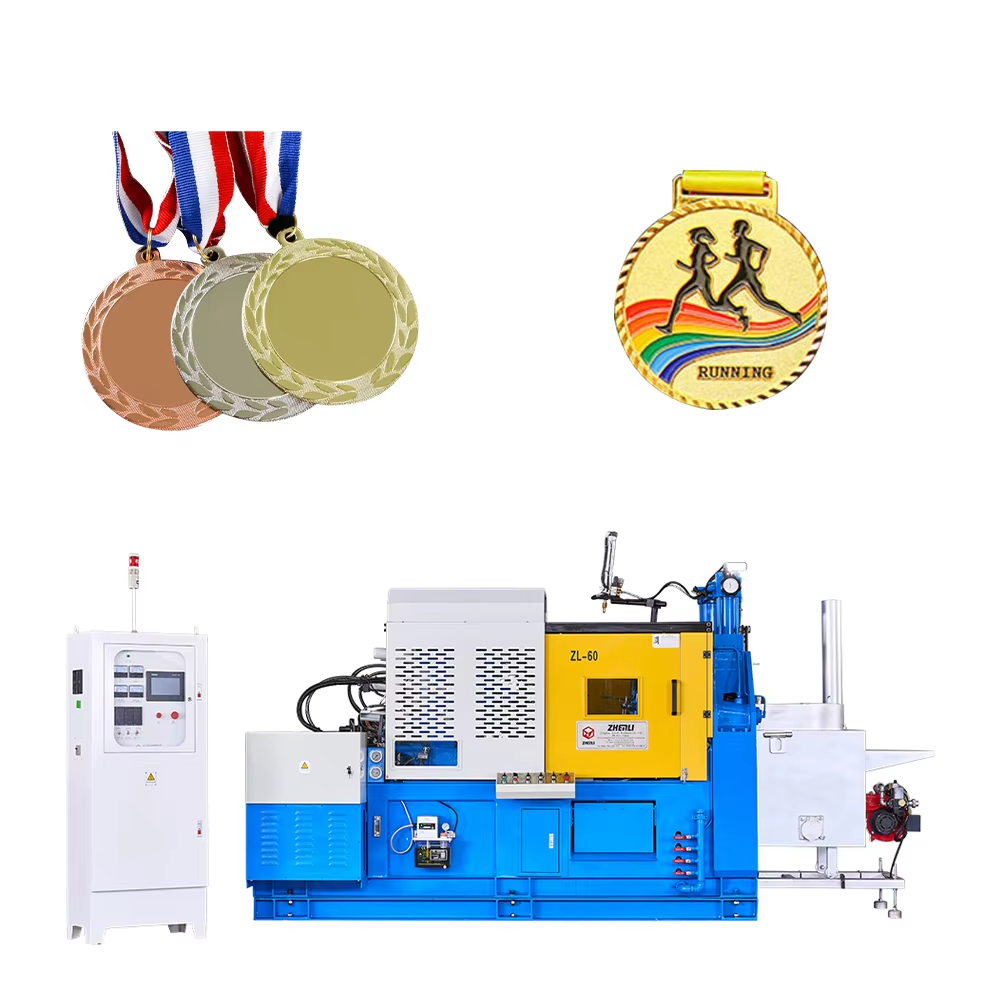
Surface finish isn't cosmetic — it's functional
Walk into any plating shop that handles zinc die castings, and the conversation usually starts the same way: "Can we get this to look like chrome without breaking the bank?" But here's the thing — surface finish on zinc parts isn't just about appearance. It affects corrosion resistance, assembly fit, and even the long-term durability of the coating system. A rough casting with porosity will bleed out trapped gases during powder coating cure, turning what should be a glossy finish into a pockmarked mess.
The question isn't whether a zinc die casting machine can deliver a superior surface. It's whether the entire process — from melt temperature to mold design to post-processing — is set up to make that happen consistently. And consistency is where most operations stumble.
Start with the machine, not the finishing line
A lot of shops treat surface finish as a post-casting problem. Polish it, plate it, call it done. That approach misses the bigger picture. The surface quality of a zinc die casting is largely determined before the shot even leaves the gooseneck.
Controlling injection speed is one of the most underrated levers. Run the shot too slow, and the molten zinc cools before filling the cavity completely, creating cold shuts that show up as visible lines or weak spots after plating. Push it too fast, and turbulent flow traps air, which expands during the 160–200°C powder coat cure and creates pinholes. Finding the sweet spot requires tuning the shot profile to the specific geometry of the part — something that many older machines struggle with, but modern servo-controlled zinc die casting machines handle with precision.
Mold temperature is another factor that doesn't get enough attention. Zinc solidifies quickly, and if the mold is running too cool, the skin layer forms before the cavity is completely filled. That leads to surface defects that no amount of polishing will fully remove. The industry benchmark for zinc die casting mold temperatures typically falls in the 150–200°C range, depending on the alloy and part geometry. Going below that threshold invites porosity and cold shuts straight into the raw casting.
What happens in the mold stays in the mold — until it doesn't
Surface finish problems that show up at the plating line often trace back to mold design decisions made months earlier. Gate location, runner design, and venting all influence how the metal fills the cavity and where turbulence occurs.
Consider a run of decorative zinc hardware — door handles, cabinet pulls, that sort of thing. The parts looked fine as-cast, but after electroplating, a batch came back with visible blistering. The culprit? Trapped gas in a thick section of the casting that hadn't vented properly. The gas expanded during the plating process and lifted the coating right off the surface. A redesign of the venting system and a slight adjustment to the gate position solved the problem, but not before an entire production run had to be scrapped.
This is where experience with the specific zinc die casting machine matters. Different machine configurations — shot sleeve design, plunger speed control, intensification pressure — interact with mold geometry in ways that aren't always obvious from the CAD model. Running sample shots and inspecting them under magnification before committing to full production is a practice that pays for itself many times over.
Polishing: the diminishing returns trap
Polishing is where surface finish costs can spiral out of control. According to industry data, finishing operations — buffing, polishing, vibratory finishing, and plating — can account for more than half of the total product cost for a zinc die casting. That's a staggering number, and it means every minute spent on the polishing wheel is money that could be saved by getting the casting right in the first place.
The standard approach starts with coarse grits around #180 and progresses through #320 and finer. But here's the nuance: polishing too aggressively can break through the dense outer skin layer of the casting, exposing the more porous subsurface. Once that skin is gone, plating adhesion suffers and corrosion resistance drops. The goal isn't to make the part as shiny as possible before plating — it's to create a clean, consistent surface that the coating system can bond to.
Some shops run a batch bake test on raw castings at 200°C for one to two hours. If a casting shows bubbles during that test, it's going to fail at the plating line. Catching those parts before any finishing work is done saves time, material, and a lot of frustration.
Coating choices and the surface preparation chain
The relationship between the raw casting and the final coating is a chain, and it's only as strong as its weakest link. Zinc is a reactive metal — it oxidizes quickly at room temperature, and any porosity in the casting complicates surface cleaning. That means the window between polishing and coating is tight. Let a polished zinc part sit too long, and a thin oxide layer forms that compromises plating adhesion.
For decorative applications, copper-nickel-chrome plating remains the gold standard. But the preparation sequence matters enormously. A typical line might include:
Alkaline cleaning to remove oils and shop dirt
Acid activation to strip the oxide layer
Copper strike to provide a base for subsequent plating
Bright nickel for leveling and corrosion protection
Chrome for the final decorative appearance
Skip any of those steps or rush the dwell times, and the finish will show it. Some operations are now using clear organic coatings as an alternative to electroplating for certain applications, which can reduce costs and simplify the process chain. But the surface prep requirements remain just as demanding.
The North American Die Casting Association (NADCA) categorizes surface finishes into grades ranging from Utility to Consumer, with corresponding expectations for defect tolerance and appearance. Matching the specification to the actual application — rather than over-specifying every job — is a practical way to control costs without compromising quality.
| Surface Finish Grade | Typical Application | Defect Tolerance | Post-Processing Required |
|---|---|---|---|
| Utility | Hidden internal components | High | Minimal |
| Functional | Mechanical parts with fit requirements | Moderate | Shot blast or chemical prep |
| Commercial | Visible but non-cosmetic parts | Low | Uniform texture required |
| Consumer | Decorative, high-visibility parts | Very low | Polishing + plating or coating |
A practical example from the shop floor
A mid-sized operation running a zinc die casting machine for automotive interior trim pieces kept hitting a wall with surface quality. Parts looked acceptable coming off the machine, but reject rates at the plating line hovered around 12% — mostly due to blistering and visible porosity after copper plating.
The team ran a systematic diagnostic. First, they checked the melt temperature at the gooseneck and found it was running about 15°C below the recommended range for the alloy. That alone was contributing to cold shuts. Second, they reviewed the shot profile and discovered the injection speed was set to a generic value that hadn't been updated when the mold was last modified. Third, they ran the bake test on raw castings and found that about 8% of the parts showed bubbles — a clear indicator of trapped gas.
Adjusting the melt temperature up to spec, retuning the shot profile for the specific mold, and adding a vacuum assist to the venting system brought the plating-line reject rate down to under 3% within two weeks. The change didn't require a new zinc die casting machine — just a better understanding of how the existing equipment interacted with the process variables.
The takeaway for production planning
Achieving a superior surface finish with a zinc die casting machine isn't about buying the most expensive equipment or running the longest polishing cycle. It's about understanding the physics of the process and controlling the variables that matter. Mold temperature, injection speed, venting design, and surface preparation all play roles that are at least as important as the polishing step itself.
For shops that treat surface finish as an afterthought, the costs add up quickly — in scrap, rework, and customer returns. For those that build surface quality into the process from the start, the results show up in lower finishing costs and more consistent output. And in a market where margins on plated zinc parts are tighter than ever, that consistency is what keeps the operation profitable.
Table of Contents
- Surface finish isn't cosmetic — it's functional
- Start with the machine, not the finishing line
- What happens in the mold stays in the mold — until it doesn't
- Polishing: the diminishing returns trap
- Coating choices and the surface preparation chain
- A practical example from the shop floor
- The takeaway for production planning