 EN
EN



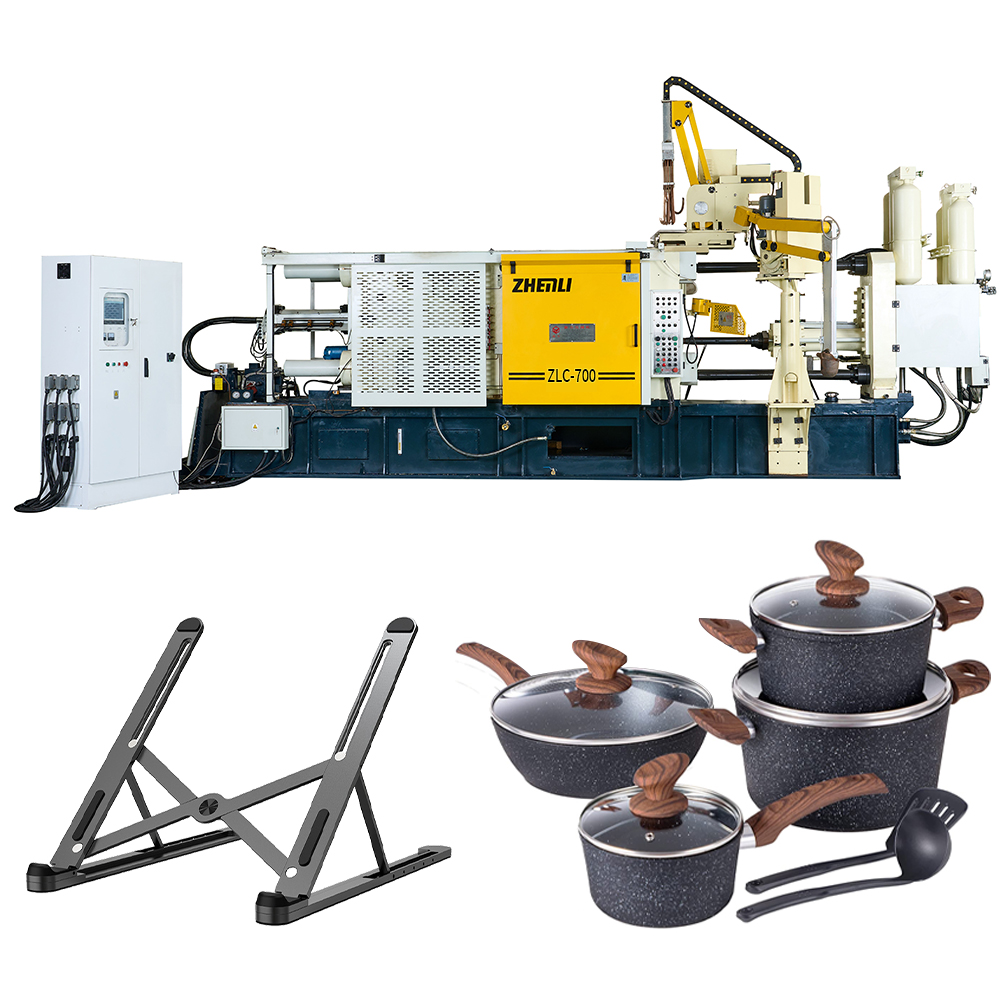
The high-temperature challenge
Aluminum and copper alloys present a fundamental problem for die casting: they melt at temperatures that destroy the equipment used to inject them. The gooseneck and plunger of a hot chamber machine, submerged in molten metal, would quickly degrade if exposed to aluminum's 660°C melting point or copper's 1,085°C melting point. The steel components would corrode, erode, and fail in short order.
That's where the cold chamber die casting machine comes in. By keeping the melting and injection systems separate, cold chamber equipment handles these high-temperature alloys without the wear issues that would cripple a hot chamber machine. But the cold chamber process brings its own challenges and complexities. Understanding how it handles aluminum and copper alloys — and what that means for part quality, cycle time, and operating cost — is essential for anyone specifying equipment for these materials.
How cold chamber works: separation as strategy
The cold chamber die casting machine operates on a simple principle: melt the metal in one place, inject it from another. The metal is prepared in a separate furnace, then transferred — either by automated ladle or manual pouring — into the shot sleeve of the cold chamber machine. The injection plunger then forces the metal into the die cavity under high pressure.
This separation protects the injection components from prolonged contact with the molten metal. The shot sleeve and plunger are exposed to the hot metal only during the injection cycle itself, not continuously. That dramatically extends their service life when running high-temperature alloys.
The cold chamber process also uses higher pressure than the hot chamber process. For aluminum and copper alloys, that higher pressure is beneficial — it helps overcome the higher surface tension and viscosity of these metals, ensuring complete fill of the die cavity. It also produces denser castings with less porosity, which matters for pressure-tight applications.
Aluminum in the cold chamber
Aluminum is the most common material run on cold chamber die casting machines. The reasons are straightforward: aluminum's melting point is too high for hot chamber equipment, and the demand for aluminum castings — in automotive, aerospace, electronics, and consumer goods — is enormous.
The cold chamber process for aluminum typically involves:
Melting the aluminum in a separate furnace, usually a gas-fired or electric resistance furnace, at temperatures around 660–750°C.
Transferring a measured amount of molten aluminum to the shot sleeve via an automated ladle system.
Injecting the metal into the die at high speed and high pressure.
Holding pressure during solidification to compensate for shrinkage.
Ejecting the part and starting the next cycle.
The cycle time for aluminum in a cold chamber machine is longer than for zinc in a hot chamber — typically 30 to 60 seconds or more, depending on part size and complexity. The ladling step adds time, and aluminum's higher heat content means longer cooling times in the die.
But the results justify the slower pace. Aluminum cold chamber castings can achieve high strength-to-weight ratios, excellent corrosion resistance, and good thermal and electrical conductivity. For automotive structural components, electronic housings, and power transmission parts, the cold chamber process delivers the performance that these applications demand.
Copper and brass: the high end of the temperature scale
Copper and brass alloys push the cold chamber die casting machine to its limits. These metals melt at temperatures from 900°C to over 1,000°C, and they're highly reactive with the steel components of the shot system.
Running copper alloys requires careful attention to several factors:
Shot sleeve life: The high temperature and chemical reactivity of molten copper accelerate wear on the shot sleeve and plunger. Hardened tool steels and specialized coatings can extend component life, but replacement is more frequent than with aluminum.
Die life: Copper alloys are abrasive and thermally demanding. Die steels need to be selected for hot hardness and thermal fatigue resistance. Water cooling channels in the die are essential to maintain reasonable cycle times.
Process control: Copper's high thermal conductivity means it solidifies quickly. Shot speed and pressure need to be precisely controlled to achieve complete fill before the metal freezes.
Despite these challenges, copper and brass die castings are produced in significant volumes for plumbing fittings, electrical components, and decorative hardware. The cold chamber machine is the only practical way to make these parts in high-pressure die casting.
The pressure advantage
One of the defining features of cold chamber die casting is the higher injection pressure it can deliver compared to hot chamber systems. This matters for aluminum and copper alloys for several reasons.
First, these alloys have higher surface tension and viscosity than zinc. They don't flow as easily into thin sections or complex geometries. Higher pressure helps overcome this resistance and ensures complete fill.
Second, higher pressure reduces porosity in the casting. The pressure forces the metal into every corner of the cavity and compresses any trapped gas, resulting in a denser, more sound casting. For pressure-tight applications — hydraulic components, compressor housings, fuel system parts — this is critical.
Third, higher pressure improves the surface quality of the casting. The metal is forced against the die walls with greater force, reproducing the die surface more faithfully and reducing surface defects.
| Alloy Type | Melting Point | Typical Injection Pressure | Typical Cycle Time | Common Applications |
|---|---|---|---|---|
| Aluminum (A380) | 660°C | 800-1,200 bar | 30-60 sec | Automotive, electronics |
| Aluminum (ADC12) | 660°C | 700-1,000 bar | 30-50 sec | General engineering |
| Brass (C85800) | 900°C | 1,000-1,500 bar | 40-70 sec | Plumbing, fittings |
| Copper | 1,085°C | 1,000-1,500 bar | 50-80 sec | Electrical, thermal |
A practical cold chamber case
An automotive supplier was producing aluminum transmission housings on a cold chamber die casting machine. The parts were large — about 4 kg each — with complex internal oil passages that had to be pressure-tight. The existing process was running at about 8% scrap, mostly due to porosity in the oil passages that showed up during pressure testing.
The team analyzed the shot profile and found that the injection speed was too low during the critical fill phase. The metal was cooling before it reached the far end of the cavity, creating cold shuts and trapped gas. Increasing the first-stage injection speed by about 20% and adjusting the transition point to second-stage (high-pressure) fill solved the problem.
Scrap dropped to under 3%. The change didn't require new equipment — just a better understanding of how the cold chamber machine's shot control parameters interacted with the specific part geometry. The lesson was that cold chamber machines have significant capability to handle difficult alloys, but that capability needs to be matched with process knowledge.
The trade-offs of cold chamber for aluminum and copper
Cold chamber die casting for aluminum and copper isn't without its downsides. The slower cycle times compared to hot chamber mean lower throughput per machine. The separate furnace and ladling system add equipment cost and complexity. The higher injection pressures require more robust and expensive machine construction.
But for high-temperature alloys, there's no practical alternative. The cold chamber die casting machine is the industry standard for aluminum and copper, and it has been refined over decades to deliver reliable, repeatable performance.
For shops running mixed production — zinc on hot chamber, aluminum on cold chamber — the cold chamber machine is often the bottleneck because of its slower cycle. That's worth factoring into production planning. But for the parts that need it, the cold chamber process delivers quality that no other casting method can match in terms of dimensional accuracy, surface finish, and mechanical properties.