 EN
EN



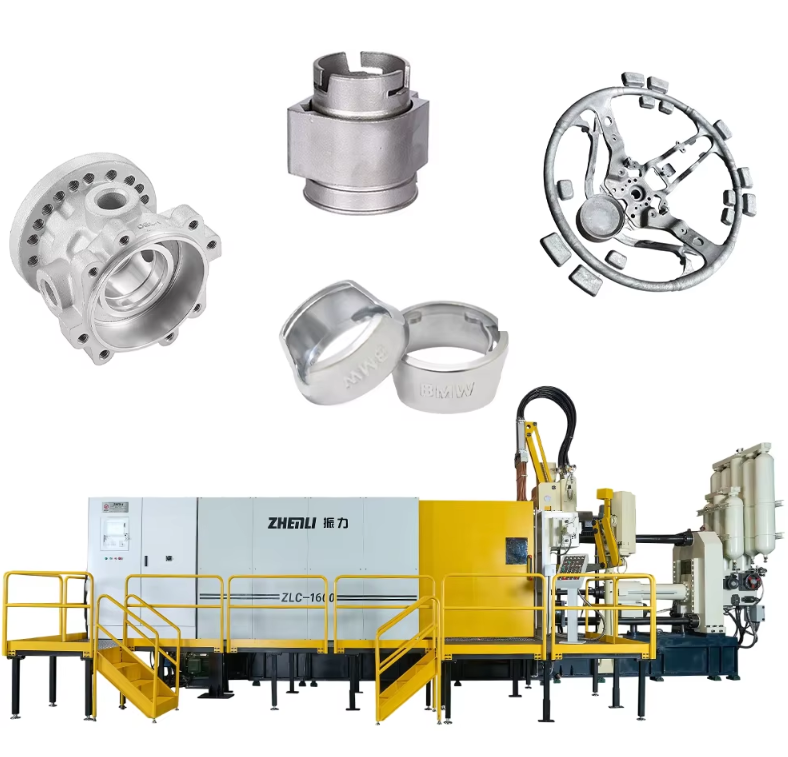
Volume Changes Everything
Low-volume production can get away with a lot. A foundry running a few hundred parts a month can afford slower cycles, more manual intervention, and higher scrap rates. High-volume production—think tens of thousands of parts per week—demands a fundamentally different approach. The economics shift from "make it work" to "make it work repeatably, fast, and cheap enough to matter."
Aluminum injection machines, more precisely called cold-chamber high-pressure die casting machines, exist to solve that high-volume equation. They're not the right tool for every job, but for applications that need aluminum parts by the millions, they're essentially irreplaceable.
The reasons come down to three things: cycle speed, dimensional consistency, and the ability to run unattended for extended periods. Each of these capabilities ties directly to machine design and process control. Understanding why these machines excel at high-volume work starts with understanding what high-volume production actually demands.
The Cold Chamber Design Enables Aluminum
Aluminum's melting point sits around 660°C, which rules out hot-chamber machines for practical purposes. In a hot-chamber design, the injection mechanism sits immersed in the molten metal bath. At aluminum's temperatures, that immersion would destroy the moving parts in short order. The cold chamber solves this by keeping the injection system separate from the melt.
The metal gets melted in a separate furnace, then ladled or pumped into the shot sleeve for each cycle. The injection plunger pushes the metal into the die, then retracts. The shot sleeve gets cleaned and prepared for the next shot. This separation protects the machine's moving parts from constant thermal assault and allows the use of higher injection pressures—up to 180 MPa on some machines.
That pressure capability matters for high-volume work. Higher pressure means the machine can fill complex cavities faster and with less tendency to freeze off before the cavity is full. It also means thicker sections can be fed without shrinkage porosity, reducing scrap rates that would otherwise eat into the economics of volume production.
The trade-off is cycle time. A cold chamber machine takes longer per cycle than a hot chamber because of the ladling step. But for aluminum, there's no alternative. The cold chamber design is what makes high-volume aluminum casting possible at all.
Cycle Speed: The Engine of Volume Production
High-volume production is a numbers game. Cycle time drives throughput, and throughput drives unit cost. Shaving one second off a 60-second cycle yields a 1.7% capacity increase. Over a 24-hour run, that's an extra 24 parts per thousand. Over a year, it adds up to real money.
Aluminum injection machines have gotten faster over the past decade. Hydraulic systems with double-proportional valves allow independent control of flow and pressure during the injection phase, reducing cycle times while maintaining quality. Servo-driven systems cut energy consumption and improve response times. The best machines now run dry-cycle times under 3 seconds for small parts and under 10 seconds for large ones.
But cycle speed isn't just about how fast the machine moves. It's about how fast it can stabilize between shots. A machine that produces a good part every 45 seconds but takes 10 shots to warm up and drifts after lunch isn't a high-volume machine—it's a high-maintenance one. The machines that excel at volume production are the ones that hold their settings shot after shot, hour after hour, shift after shift.
That stability comes from robust construction. Machines with heavy cast iron beds, precision-ground platens, and high-rigidity toggle systems maintain their alignment over millions of cycles. Thermal expansion gets managed through balanced cooling circuits and temperature-controlled hydraulic oil. The result is a machine that produces the same part at 8 AM and 4 PM—and again next week.
How cycle time improvements affect annual output:
| Cycle Time (seconds) | Shots per Hour | Shots per 24 Hours | Annual Shots (300 days) |
|---|---|---|---|
| 60 | 60 | 1,440 | 432,000 |
| 50 | 72 | 1,728 | 518,400 |
| 45 | 80 | 1,920 | 576,000 |
| 40 | 90 | 2,160 | 648,000 |
Each 5-second reduction adds about 86,000 shots per year at 300 operating days. At 1 kg per shot, that's 86 tons of additional annual capacity from the same machine.
Automation Integration: Running Unattended Is the Goal
High-volume production reaches its full potential only when the machine can run without an operator standing at the control panel. Automation integration turns a die casting machine into a production cell.
Automatic ladling systems deliver molten metal to the shot sleeve on a programmed schedule, eliminating the variability of manual pouring. Sprayers clean and lubricate the die surfaces between shots, maintaining consistent release conditions. Extractors remove the casting from the die and place it on a cooling conveyor. Trimming presses separate the runner and overflows from the part. The whole sequence runs on a timer, with sensors checking each step before the next one starts.
The economics are straightforward: one automated cell running three shifts produces more parts than three manual machines running one shift each, and it does so with fewer people and less variability. The capital cost is higher upfront, but the payback period for high-volume programs typically runs 12–18 months.
Integration extends beyond the machine itself. Conveyors carry parts to secondary operations—shot blasting, machining, inspection. Vision systems check critical dimensions and flag out-of-tolerance parts before they reach the customer. Data from the machine's PLC feeds into production monitoring systems that track overall equipment effectiveness (OEE) in real time.
A plant in the southeastern US running automotive structural parts on a 1,200-ton cold chamber machine achieved 92% uptime over a six-month period—not through heroic maintenance efforts but through systematic automation and process monitoring. The machine ran 22 hours a day, with two hours reserved for scheduled maintenance and die changes. That level of utilization is what makes high-volume aluminum casting economically viable.
Dimensional Consistency at Scale
Running fast doesn't help if the parts don't meet spec. High-volume production magnifies every quality problem because a bad setup produces thousands of bad parts before anyone notices. Dimensional consistency isn't just a quality metric—it's a production efficiency metric.
Aluminum injection machines achieve consistency through precise control of the three variables that matter most: injection speed, intensification pressure, and die temperature.
Injection speed control has improved dramatically with the introduction of real-time closed-loop systems. These systems measure plunger position and velocity hundreds of times per second, adjusting hydraulic flow to maintain the target speed profile regardless of variations in oil temperature or viscosity. The result is fill consistency within ±2% of target from shot to shot.
Intensification pressure gets similar treatment. A pressure transducer in the hydraulic circuit feeds back to the controller, which adjusts the intensification valve to maintain the setpoint within ±1 MPa. That precision matters for feeding shrinkage in thick sections—a 2 MPa drop in intensification pressure can increase porosity by 0.5% in a 20 mm section.
Die temperature control uses multiple independent circuits, each with its own thermocouple and control valve. The goal is to hold the die surface temperature within ±5°C of setpoint across the entire cavity. That's harder than it sounds, because the die heats unevenly during fill and cools unevenly during the dwell and ejection phases. Modern machines compensate with predictive algorithms that anticipate temperature changes and adjust cooling flow before the deviation occurs.
A consistent process produces consistent parts. A part that measures 100.00 mm at the start of a shift should measure 100.00 mm at the end. The best aluminum injection machines hold that dimension within ±0.05 mm over a 24-hour run.
The Economics of Scrap Reduction
Scrap is the hidden tax on high-volume production. A 5% scrap rate on a million-part program means 50,000 bad parts—50,000 parts that consumed material, machine time, and labor but generate no revenue. Reducing scrap from 5% to 2% adds 30,000 good parts to the bottom line without increasing capacity.
Aluminum injection machines attack scrap through process control and monitoring. Real-time shot monitoring systems track injection pressure, plunger velocity, and cavity pressure for every shot. When a parameter drifts outside control limits, the system alerts the operator or automatically rejects the part. This prevents bad parts from reaching downstream operations where they'd consume additional labor and processing time.
The data from these monitoring systems also feeds into predictive maintenance programs. A gradual increase in injection pressure over time indicates wear in the shot sleeve or plunger tip. Catching that wear early allows replacement during scheduled downtime rather than during an unplanned breakdown that costs hours of production.
One manufacturer of aluminum pump housings reduced their scrap rate from 6.8% to 2.1% over 18 months by implementing real-time process monitoring on their cold chamber machines. The improvement came not from a single breakthrough but from systematically identifying and eliminating sources of variation—shot-to-shot temperature drift, plunger wear, inconsistent lubrication. Each fix was small, but the cumulative effect was dramatic.
When High Volume Doesn't Make Sense
Aluminum injection machines aren't the right answer for every application. Low-volume, high-mix production—where the setup changes every few hundred parts—doesn't justify the capital investment or the setup time. For those applications, sand casting, permanent mold casting, or even CNC machining from billet might be more economical.
Parts with extreme size requirements also push the limits. While machines exist up to 1,600 tons and beyond, the economics of casting a 50 kg part in aluminum don't always work out. The material cost alone—aluminum at $2,500 per ton—makes a 50 kg part worth $125 in raw material before any processing. At that point, every scrap part hurts.
The sweet spot for aluminum injection machines is parts between 0.1 kg and 10 kg, in volumes exceeding 50,000 parts per year. At those volumes and sizes, the per-part cost advantage over other processes becomes decisive. The machine pays for itself in reduced labor, faster cycle times, and lower material waste.
Zhenli Machinery offers a range of aluminum injection machines from 100 to 1,300 tons, designed for the kind of repeatable, high-volume production that makes economic sense across automotive, industrial, and consumer applications. With more than 20 years in the die casting equipment space, the company has built a reputation for machines that hold their settings and deliver consistent parts shift after shift. For operations where volume and consistency matter more than occasional flexibility, that combination of reliability and throughput is what keeps the production line moving.