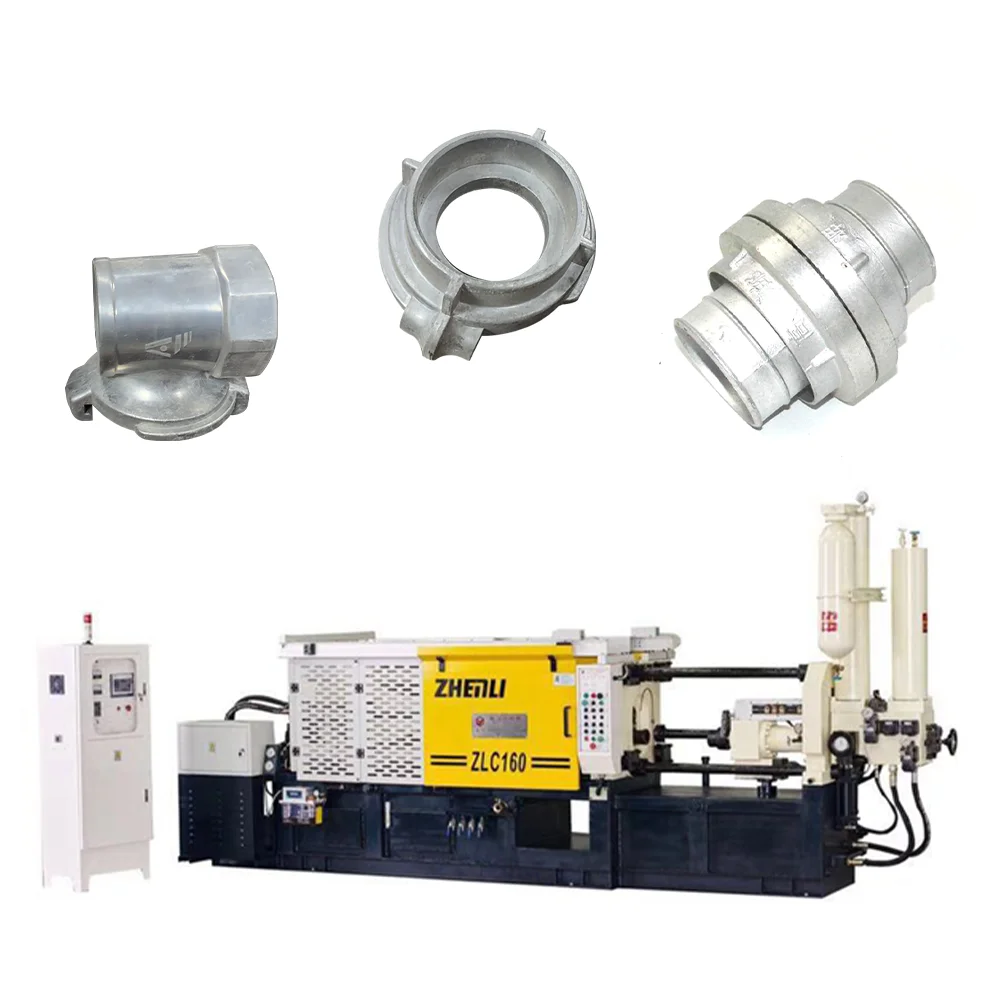
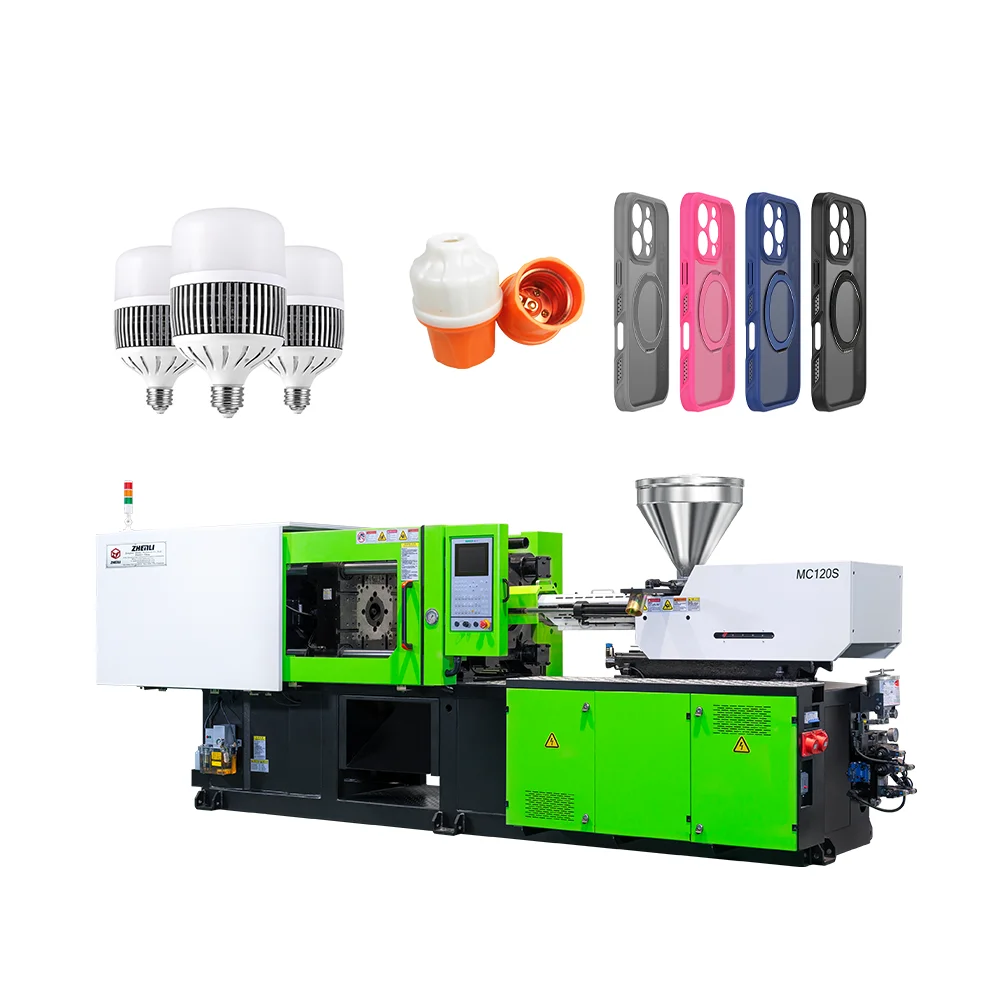
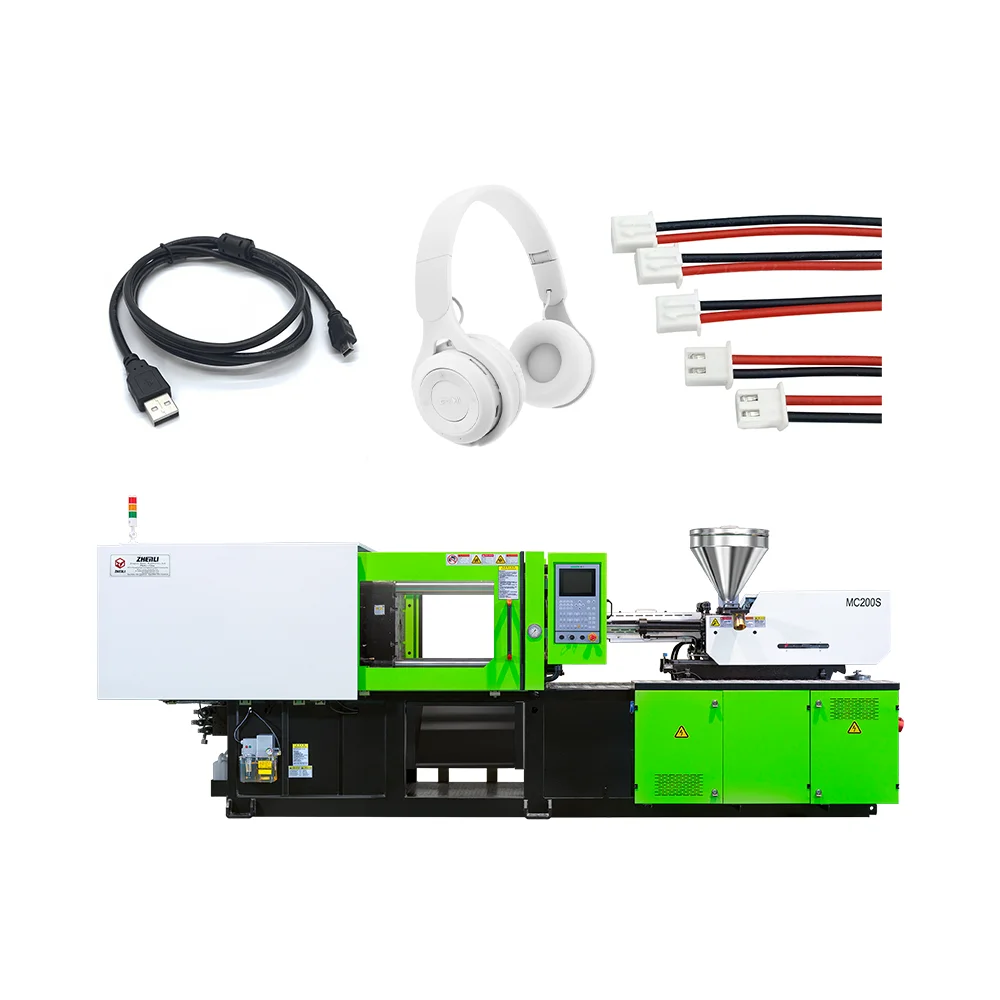
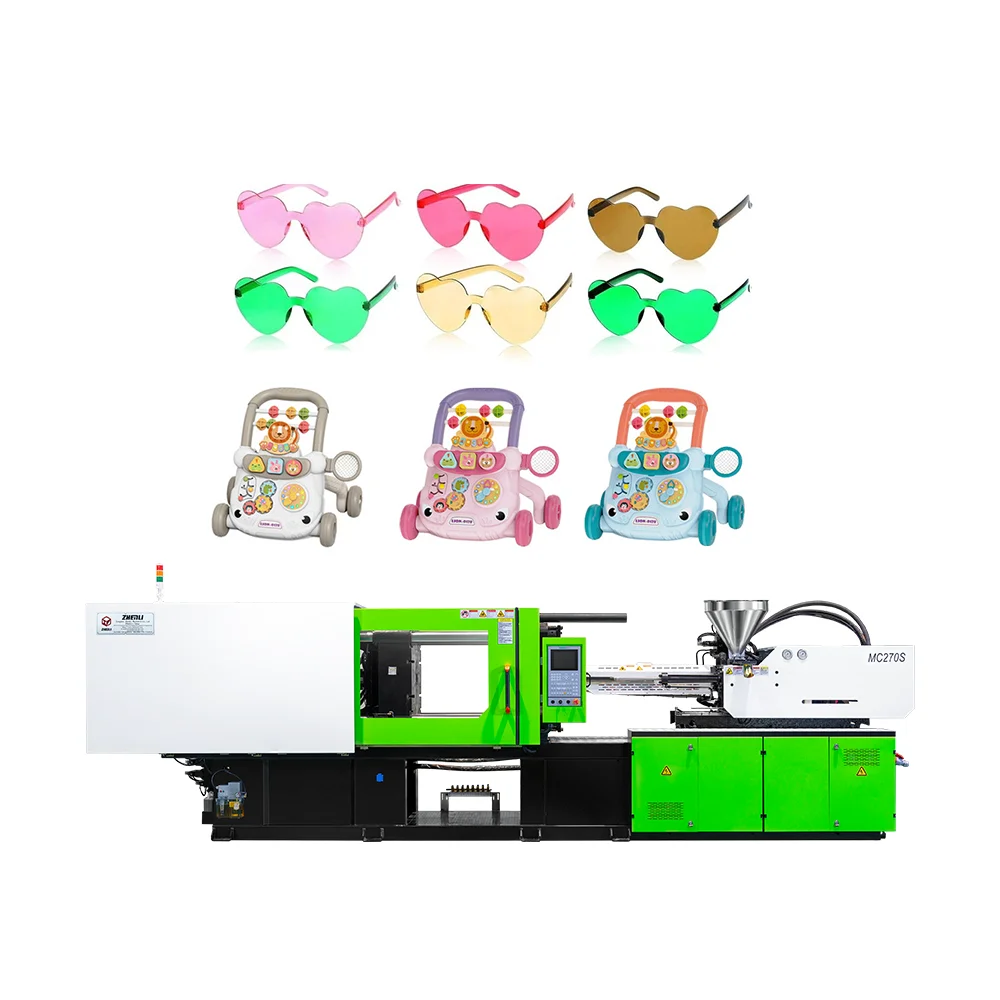
Automated Die Casting Solutions for High-Volume Precision Parts

[email protected]         +86-13302590675

Get a Free Quote

Our representative will contact you soon.
Email
Mobile/WhatsApp
Name
Company Name
Message
0/1000

Automated Die Casting - Smart Production Solutions by Jiangmen Zhenli

Focused on automated die casting, this page showcases Zhenli’s intelligent casting systems integrated with automatic spraying, ladling, and part-extracting functions. These automated solutions boost efficiency, reduce labor costs, and ensure consistent quality for high-volume production. Compatible with hot/cold chamber and high/low pressure machines, the systems feature Siemens/ARCUCHI controllers for precise parameter adjustment. The page details automation levels, integration options, application cases (auto parts, electronics), and ISO/CE certifications. Zhenli provides customized automated die casting solutions, plus installation, training, and global after-sales support for 50+ countries.
Get A Quote

Advantages of the product

Fast Cycle Time for High Production Efficiency

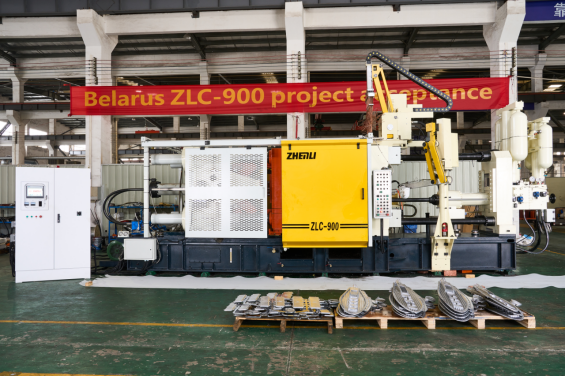
The machines feature an optimized workflow, including automatic mold clamping, metal feeding, and part ejection. The entire casting cycle for small to medium sized parts (e.g., zinc alloy hardware) is as short as 30 45 seconds, while larger automotive parts (e.g., aluminum alloy wheel hubs) take only 2 3 minutes. Compared to traditional die casting machines with 1 2 minute cycles for small parts, Zhenli’s models increase production capacity by 30% 50%, helping factories meet tight delivery deadlines, especially during peak demand seasons.

Related products

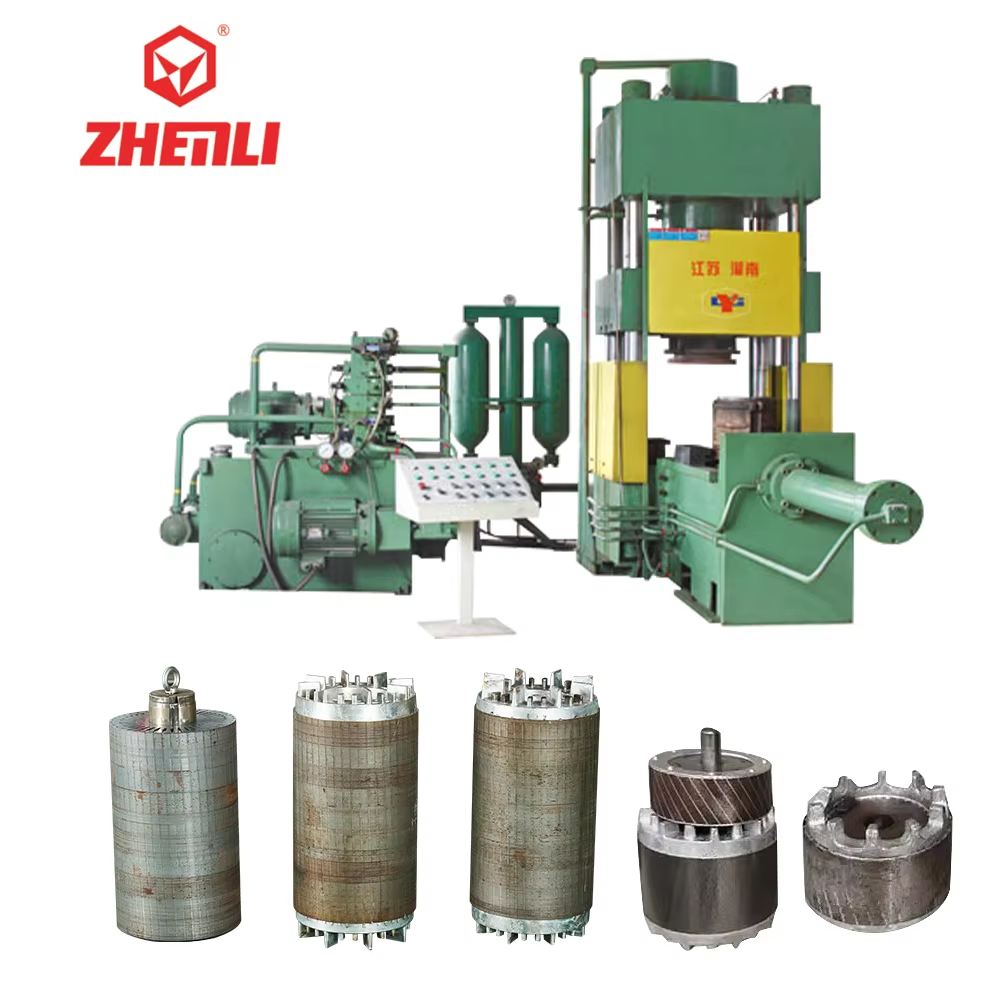
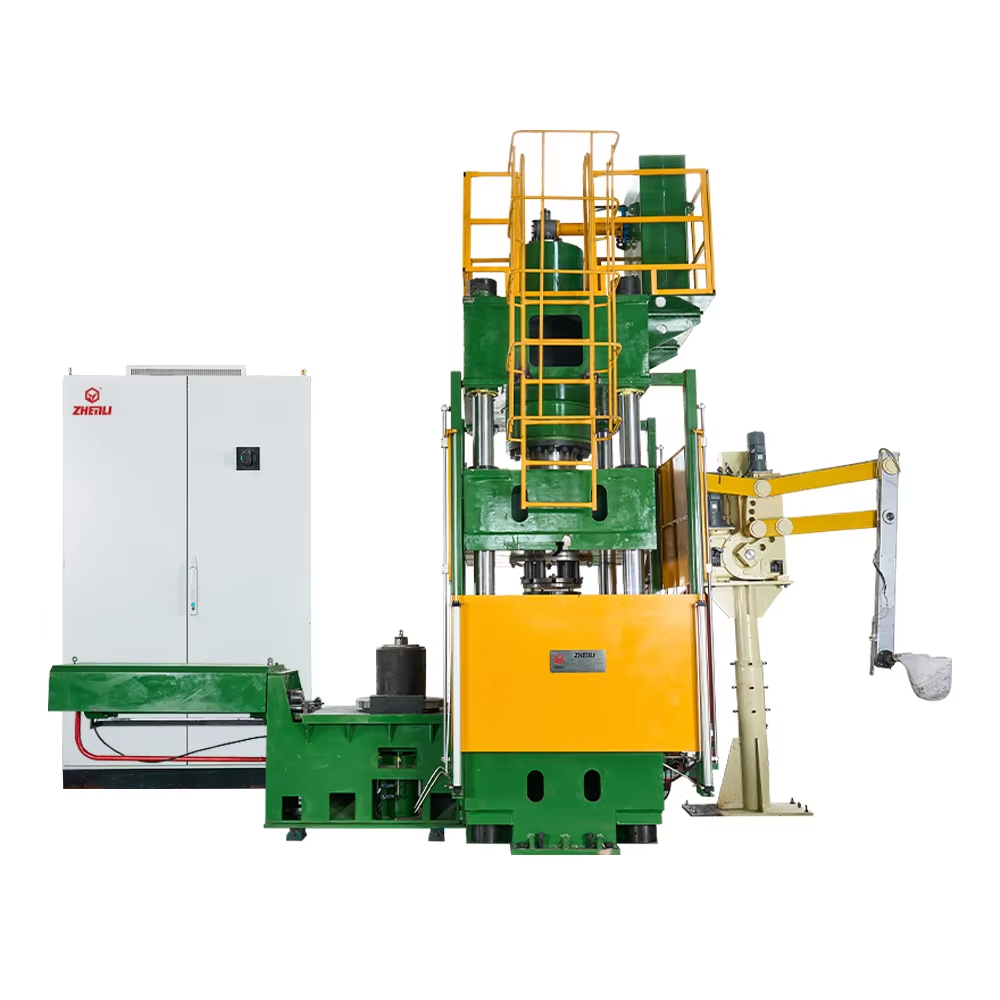
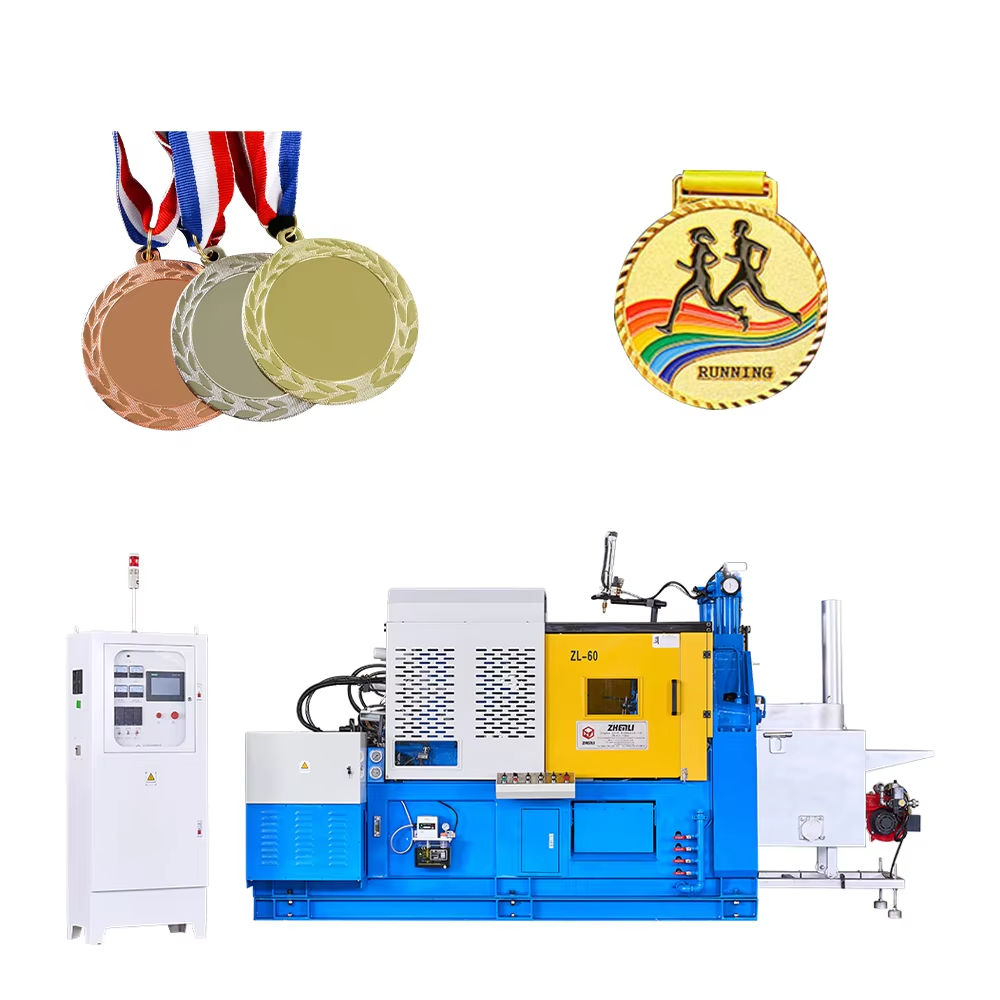
Automated die casting represents the future of high volume metal component production, integrating robotic systems, intelligent process control, and data analytics to deliver unmatched efficiency, consistency, and cost effectiveness. Jiangmen Zhenli Machinery’s automated die casting solutions encompass fully integrated production lines that span molten metal preparation, mold clamping, injection, part extraction, post processing, and quality inspection—catering to industries such as automotive, electronics, and consumer goods. At the heart of the system is a die casting machine (hot or cold chamber) paired with collaborative robots (cobots) or industrial robots for tasks including automated ladling, mold spraying, part extraction, and trimming. The robotic systems offer repeatability of ±0.05 mm, ensuring consistent part handling and reducing human error. The centralized intelligent control system (Siemens/ARCUCHI) synchronizes all components, enabling real time monitoring of key parameters (temperature, pressure, cycle time, defect rate) and data logging for traceability and process optimization. Advanced features include AI driven defect detection (via vision systems and X ray inspection) that identifies surface and internal flaws with 99% accuracy, reducing scrap rates by 20–30%. Automated mold change systems reduce setup time by 50% compared to manual operations, supporting flexible production of multiple part types. Energy efficiency is optimized through regenerative hydraulic systems, variable frequency drives, and heat recovery technology—lowering operational costs by 18–22%. Safety is paramount, with the system complying with ISO 10218 (robot safety) and CE standards, featuring safety fences, light curtains, and emergency stop protocols. Zhenli’s automated die casting solutions support materials including aluminum, zinc, and magnesium alloys, with customization options for robot payload capacity, conveyor integration, and inline quality control modules (e.g., CMM for dimensional accuracy checks). The one stop service includes system design, integration, installation, operator training (on robot programming and process control), and ongoing maintenance support. Global after sales teams provide 24/7 technical assistance, ensuring minimal downtime for critical production lines. By eliminating manual labor, reducing cycle times (to as low as 15 seconds per part), and improving part consistency, Zhenli’s automated die casting solutions enable manufacturers to scale production, reduce costs, and meet the strict quality requirements of global markets—positioning them for success in an increasingly competitive industry.

Frequently Asked Questions

Are the die casting machines specialized in specific materials?

Yes, they are specialized in aluminum and aluminum alloys. All die casting machine descriptions mention aluminum: "Car Auto Part Engine Block Aluminum Die Casting Machine" and "Aluminum Alloy Car Wheel Weight Casting Machine". They are engineered for aluminum’s properties (e.g., melting point, flow characteristics) and no other materials (like zinc or copper) are mentioned.

Related Articles

What Factors Determine the Choice of Metal Casting Machinery?

27

Oct

What Factors Determine the Choice of Metal Casting Machinery?

Casting Method and Compatibility with Metal Casting Machinery How Different Casting Methods Influence Machinery Requirements What kind of casting gets chosen really affects what sort of machinery ends up being needed for metal casting operations, e...
View More
Why Consider a Supplier with Both R&D and Production Capabilities?

27

Oct

Why Consider a Supplier with Both R&D and Production Capabilities?

Faster Innovation and Shorter Time to Market Integration of R&D and production systems for faster innovation cycles Integrated R&D and production systems eliminate costly handoffs between teams, creating a closed-loop feedback process. Engineers ga...
View More
What Should You Look for in an Injection Molding Machine Supplier?

27

Oct

What Should You Look for in an Injection Molding Machine Supplier?

Evaluate Machine Specifications Aligned with Your Product Design Picking the right injection molding machine for a specific product design means looking at three main specs: clamping force measured in tons, injection volume in ounces or cubic centi...
View More
How to Ensure Quality Consistency in Zinc Die Casting Operations?

27

Oct

How to Ensure Quality Consistency in Zinc Die Casting Operations?

Material Selection and Alloy Integrity for Reliable Zinc Die Casting Importance of Alloy Type in Zinc Die Casting Properties Choosing the right zinc alloy makes all the difference when it comes to how well something performs mechanically and how ma...
View More

customer evaluation

Easton

We make engine blocks, gear housings, and this machine fits all our molds. Mold clamping force is adjustable for small/large parts. Changing molds takes under an hour, great for multi product lines. It also has mold preheating, improving casting surface quality.

Get a Free Quote

Our representative will contact you soon.
Email
Mobile/WhatsApp
Name
Company Name
Message
0/1000
High Precision for Complex Auto Components

High Precision for Complex Auto Components

This die casting machine excels at producing complex, high precision parts like aluminum engine blocks and gear housings. It achieves a tolerance of ±0.02mm for critical features (such as engine cylinder bores) and maintains consistent dimensional accuracy across large batches. The machine’s advanced plunger control ensures molten metal fills mold cavities evenly, avoiding thin spots or overflows. This precision meets the strict requirements of the automotive industry, where even small deviations can affect engine performance or part fitment.
Fast Cycle Time to Improve Productivity

Fast Cycle Time to Improve Productivity

With a cycle time as short as 2 minutes per part (for standard engine blocks), this machine outperforms traditional die casters by 30–40%. It heats up quickly (reaching operating temperature in 30 minutes) and uses an efficient cooling system to speed up part solidification. For factories running 12 hour shifts, this translates to a daily output of 1,400–1,600 parts—up from 900–1,100 with older machines. The fast cycle time helps meet high volume orders without extending working hours.
Durable Components for Long Service Life

Durable Components for Long Service Life

All critical components are built to withstand the harsh conditions of die casting. The mold is made of H13 hot work tool steel, which resists wear and thermal fatigue, lasting up to 100,000 casting cycles before needing repair. The hydraulic system uses high pressure hoses and seals that handle repeated pressure changes without leaks, and the heating element is a nickel chromium alloy that maintains consistent heat output for years. Most users report 3–5 years of trouble free operation with regular maintenance.
WhatsApp WhatsApp
WhatsApp
Email Email Inquiry Inquiry TopTop